Cultural History and Significance of an Akan Civilization
The Ashanti People
Cultural History and Significance of an Akan Civilization
Origins and the Rise of the Kingdom
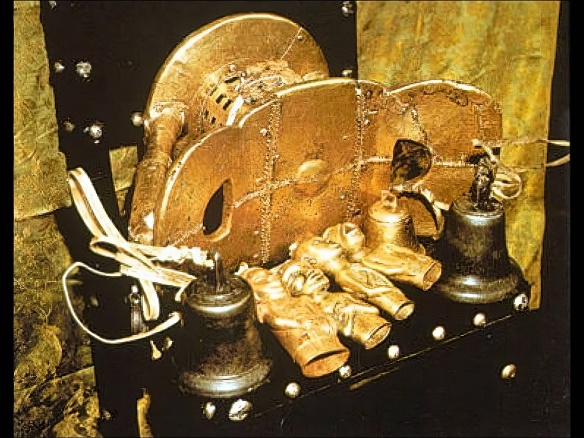 The Ashanti, also written Asante, are an Akan-speaking people of the central forest belt of present-day Ghana. They emerged from a cluster of small Akan chiefdoms in the late seventeenth century, when the warrior-statesman Osei Tutu, advised by the priest and counselor Okomfo Anokye, united the surrounding clans into a single confederacy with the city of Kumasi as its capital. According to tradition, Anokye conjured the Sika Dwa Kofi, the Golden Stool, from the sky and declared it the sacred embodiment of the soul of the Ashanti nation. To this day, no person—including the Asantehene himself—may sit upon it, and it remains the supreme symbol of Ashanti identity.
The Golden Stool – Sika Dwa Kofi of the Ashanti
Empire, Gold, and Trade
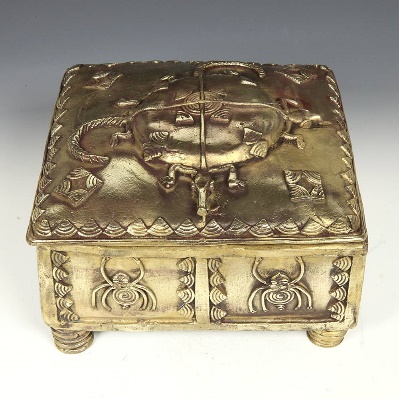
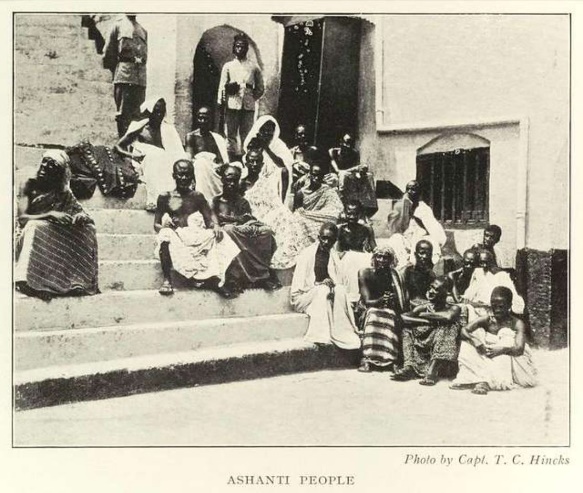 Through the eighteenth and nineteenth centuries, the Ashanti built one of the most powerful states in West Africa, controlling the gold-rich forests between the Volta and Comoé rivers and engaging extensively in trans-Saharan and Atlantic trade. Gold dust served as currency, weighed out with finely cast brass goldweights that doubled as miniature sculptures depicting proverbs, animals, and human scenes. Ashanti armies resisted British encroachment in a series of Anglo-Ashanti Wars across the nineteenth century, defending their sovereignty until the kingdom was finally absorbed into the Gold Coast colony in 1902. The traditional state nonetheless endured, and the Asantehene continues to reign as a constitutional monarch within modern Ghana.
Gold Weight Box – Primitive Collection
Social Organization and Belief
Ashanti society is organized around eight matrilineal clans (abusua), through which inheritance, land rights, and political office descend. The queen mother, or Ohemaa, plays a central political role, nominating successors to the stool and advising on matters of state. Religion blends reverence for a supreme creator, Nyame, with veneration of the lesser deities, the abosom, and the ancestors, whose presence is invoked through libation and stool ceremonies. Major festivals such as Adae, observed every six weeks, and the great annual Akwasidae and Odwira celebrations, renew the bonds between the living, the ancestors, and the sacred regalia of the kingdom.
Arts, Cloth, and Craft
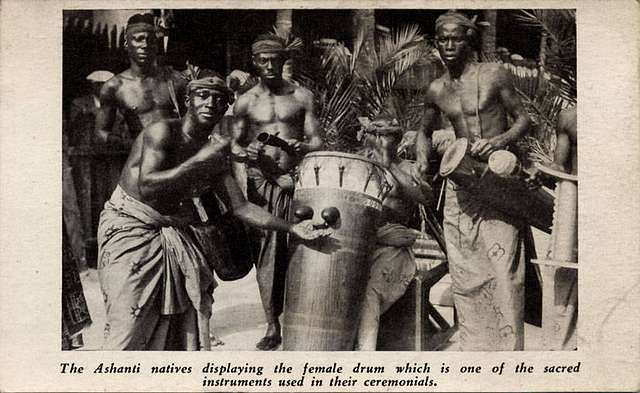 The cultural achievements of the Ashanti are inseparable from their court arts. Kente cloth, woven on narrow strip looms in the village of Bonwire, encodes proverbs and history in its named patterns and symbolic colors. Adinkra cloth, stamped with calabash blocks in Ntonso, carries more than sixty pictographic symbols expressing Akan philosophy, including the famous Sankofa bird that teaches the value of returning to retrieve what is wise from the past. Wood carvers in Ahwiaa produce stools, fertility figures, and linguist staffs, while goldsmiths craft elaborate regalia for chiefs and queen mothers.
Significance Today
Numbering several million people, the Ashanti remain one of the largest and most culturally influential groups in Ghana. Their language, Twi, is spoken across the country, and their festivals, regalia, and oral traditions continue to shape national identity. Through the global reach of kente and adinkra, Ashanti visual culture has also become an enduring emblem of African heritage worldwide, carrying the memory of Kumasi’s royal court into classrooms, churches, fashion houses, and graduation ceremonies far beyond West Africa.