Judaica
Fez, a Friday afternoon in the mellah. The silversmith’s hammer stops as the light goes. Shabbat is coming, and the table must be ready.
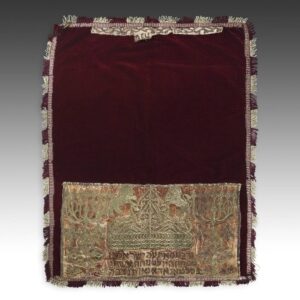
Judaica from the Maghreb is mostly Moroccan, mostly nineteenth and early twentieth century, from the years when Jewish silversmiths ranked among the leading metalworkers of Morocco. Silver pectorals engraved with Hebrew, hamsa or hand of Fatima amulets, seals and shawl pins adorned the person. Bein gavra Torah covers in brocaded silk, engraved Haggadah covers and menorahs with bird motifs served the synagogue and the Seder table. Lidded boxes inscribed in Hebrew, marquetry jewelry boxes and couscous bowls with Jewish motifs show how closely Jewish and Berber life were bound in the mellahs and the Atlas villages.
Soft silver, faded silk, dark inlaid wood. Read the small inscriptions up close.
The silversmith, one suspects, finished before sundown.
Showing the single result