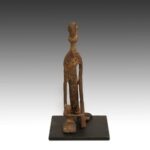
Cultural History and Significance of China’s Silk Road Corridor
Gansu Province
Cultural History and Significance of China’s Silk Road Corridor
Geography and Strategic Position
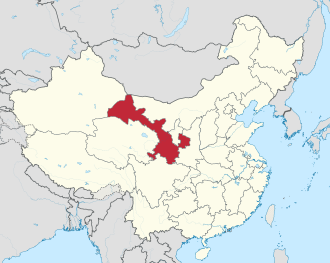 Gansu Province occupies a long, narrow band of northwestern China, stretching from the upper reaches of the Yellow River near Lanzhou to the edge of the Taklamakan Desert. Its defining feature is the Hexi Corridor, a roughly 1,200-kilometer passage hemmed in by the Qilian Mountains to the south and the Gobi Desert to the north. This natural funnel made Gansu the indispensable gateway between the Chinese heartland and Central Asia, the only practical overland route by which travelers, armies, and goods could cross between East and West for nearly two thousand years.
Gansu Province, China
Han Dynasty Foundations and the Silk Road
 The story of Gansu as a cultural crossroads begins in the second century BCE. After Emperor Wu of Han dispatched the envoy Zhang Qian to explore the western regions, Han general Huo Qubing drove the nomadic Xiongnu out of the corridor in 121 BCE. The Han then established the four garrison cities of Wuwei, Zhangye, Jiuquan, and Dunhuang, extended the Great Wall westward to Yumen Pass, and secured the route that historians regard as the beginning of the Silk Road. For more than a millennium afterward, silk, paper, and gunpowder traveled west out of China while horses, glassware, gemstones, grapes, and new religions traveled east.
A Meeting Place of Religions
Gansu became the principal entry point through which Buddhism reached China from India and Central Asia, and over the centuries Zoroastrianism, Manichaeism, Nestorian Christianity, and Islam all moved through the corridor as well. The cosmopolitan oasis city of Dunhuang grew into a hub of Eurasian cultural exchange, where the legendary Tang pilgrim 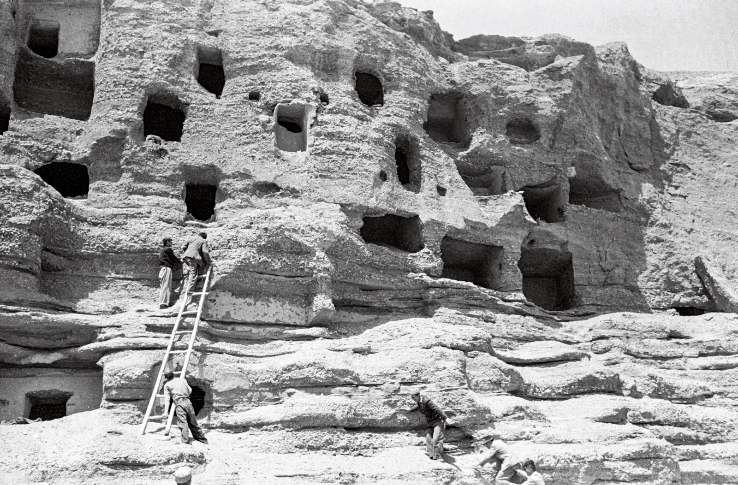 Xuanzang paused on his journey to India. The Magao Caves at Dunhuang, carved into a cliff over more than a thousand years beginning in 366 CE, preserving 492 grottoes containing roughly 45,000 square meters of murals and 2,400 painted sculptures spanning ten dynasties, and were inscribed as a UNESCO World Heritage Site in 1987. A library cave sealed around the eleventh century yielded tens of thousands of manuscripts in Chinese, Tibetan, Sogdian, Sanskrit, Uyghur, Syriac, and Hebrew, an unmatched archive of medieval Asia.
Zhangye National Geopark, Gansu Province, China
Frontier Fortresses and Imperial Memory
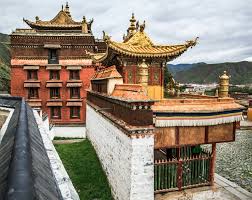 Gansu was repeatedly contested between Chinese, Tibetan, Uyghur, Tangut, and Mongol powers. The Tibetan Empire occupied Dunhuang in 786, and the Tangut Western Xia later ruled much of the corridor before the Mongol conquest. Under the Ming dynasty, the Great Wall was rebuilt across Hexi and anchored at the magnificent Jiayu Pass, the western terminus often called “the most majestic pass under heaven.” Labrang Monastery, founded in southern Gansu in 1710, remains one of the six great institutions of Tibetan Buddhism’s Gelug school.
Labrang Monastery, Gansu Province, China
Living Heritage
Today Gansu remains one of China’s most ethnically and culturally varied provinces, home to Han, Hui, Tibetan, Mongol, Dongxiang, Bonan, and Yugur communities, each contributing language, cuisine, music, and craft. Lanzhou hand-pulled beef noodles, Tibetan thangka painting, and the painted folk furniture of Hexi villages all carry forward the layered inheritance of a province that has spent two thousand years translating one civilization to another.