A Meeting of Tradition and Stone
Hand-Carved Reclining Ganesha in Riverstone from Mojokerto
A Meeting of Tradition and Stone
A hand-carved reclining Ganesha in Riverstone from Mojokerto is a striking marriage of one of Asia’s most beloved deities with one of Indonesia’s oldest stone-carving traditions. Mojokerto Regency in East Java sits at the heart of what was once the Majapahit Empire, the Hindu-Buddhist kingdom that flourished from the late thirteenth to the sixteenth century and at its peak claimed influence across much of Southeast Asia. The carvers based in the village of Bejijong and the surrounding Trowulan area are the cultural heirs of the master sculptors who once decorated the empire’s temples, gateways, and royal sanctuaries. To this day they continue to render the gods of the old religion in the dark volcanic stone of the Javanese rivers.
The Reclining Form
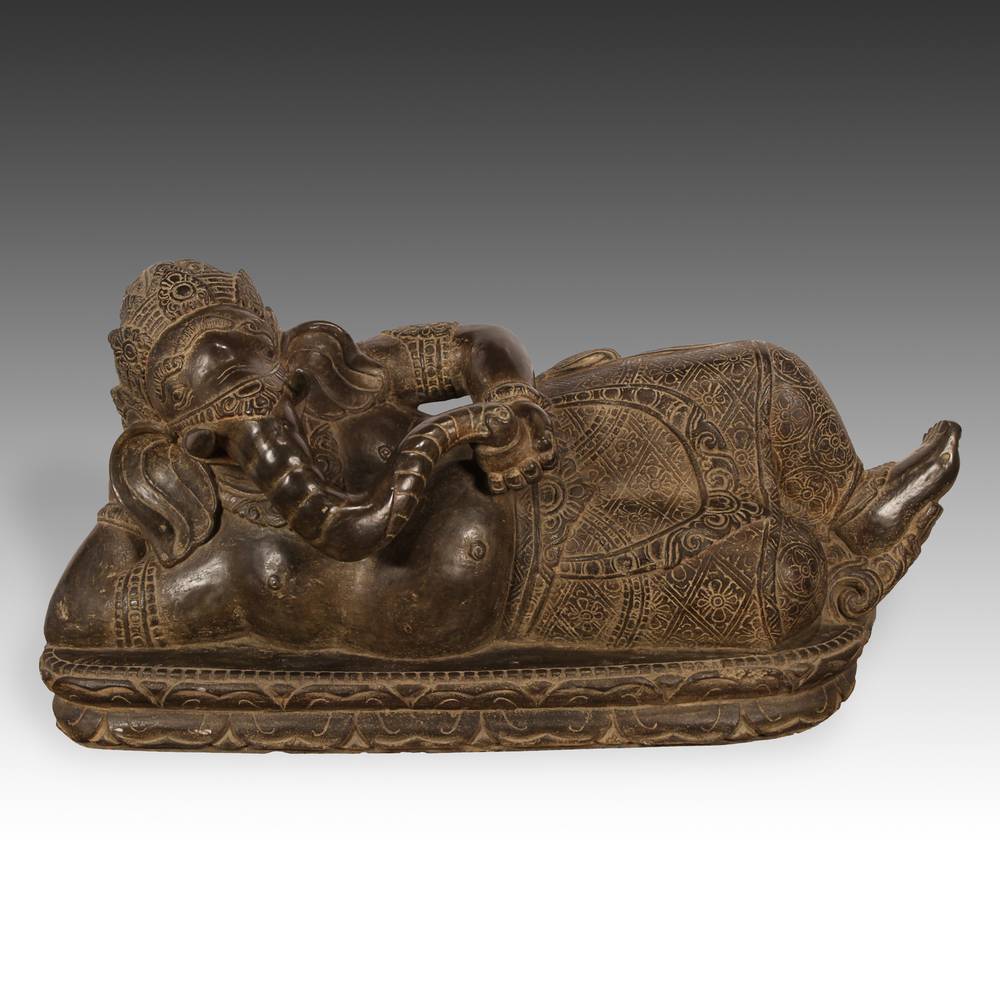
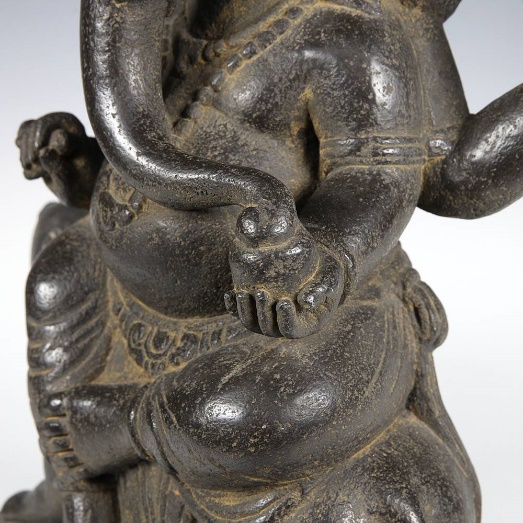 Most images of Ganesha across India and Southeast Asia depict him seated in lotus posture or standing in dance, but a smaller and beloved tradition shows him reclining at ease, propped on one elbow with his trunk curled toward a bowl of sweets. This relaxed posture, sometimes called sukhasana or shayana, expresses an aspect of the elephant-headed god that complements his role as remover of obstacles. Reclining Ganesha is the deity at rest, content, abundant, and approachable, embodying the ease of a mind no longer troubled by impediments. He invites the devotee into the leisurely contentment that follows a successful undertaking. In domestic shrines and garden settings, the reclining form is often chosen for its tranquil presence.
Reclining Ganesha I Riverstone – Primitive Collection
Riverstone and Carving Technique
The signature material of Mojokerto carving is andesite, a dense, dark volcanic stone formed in the surrounding mountains and washed down through riverbeds over millennia, which is why pieces produced here are commonly described as Riverstone. Boulders are gathered from rivers and quarries and worked outdoors under simple shelters, with the rhythmic tapping of hammer and chisel echoing along the lanes of Bejijong. The carver begins by roughing out the broad volumes of the body, then refines the elephant head, the curling trunk, the rounded belly, the jewelry, and the lotus base. Final touches include the eyes, the auspicious tilaka mark on the forehead, and the patterned bands of the dhoti. A single reclining Ganesha may take many weeks to complete.
Significance
Many of these statues are commissioned by Hindu Balinese clients for use in family temples and palace compounds, with finished works regularly transported eastward across the Bali Strait. Others find homes and private collections throughout Indonesia and abroad. Each reclining Ganesha carries forward a thousand-year visual tradition rooted in Majapahit-era sculpture while bringing the deity’s blessings of wisdom, prosperity, and ease into the daily lives of those who place him in their homes.