The Elephant-Headed God
Ganesha: History and Significance
The Elephant-Headed God
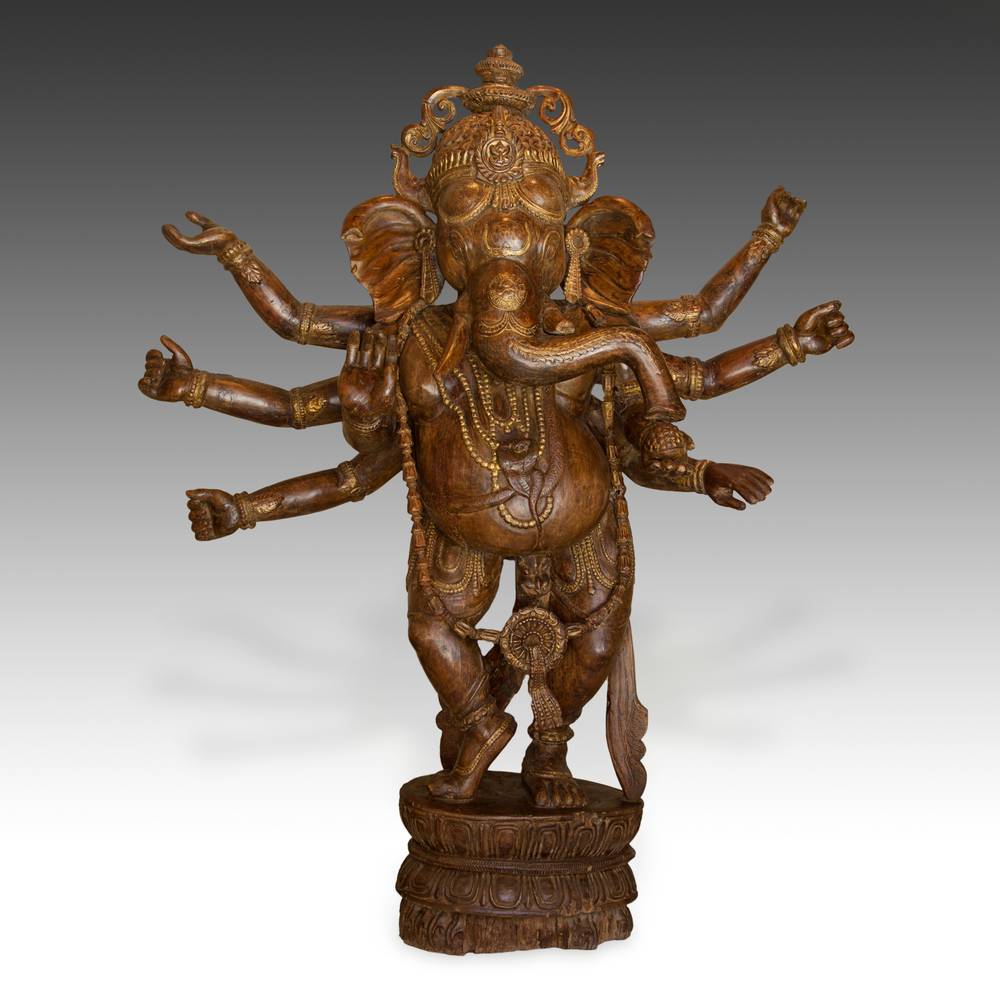 Ganesha, also called Ganapati, Vinayaka, and Pillaiyar, is among the most universally beloved deities in the Hindu pantheon and one of the most easily recognized figures in world religion. Depicted with the head of an elephant atop the body of a portly child, four arms holding implements that vary by region, and a small mouse seated humbly at his feet as his vehicle, he is venerated as the lord of beginnings, the remover of obstacles, the patron of wisdom and learning, and the master of intellect. His image graces the doorways of homes, the start of letters, the openings of ceremonies, and the foundation stones of new buildings, for in Hindu tradition no undertaking can prosper unless Ganesha is invoked at its outset.
A seven-foot Tantric Ganesha – from Primitive – Chicago
Origins and Mythology
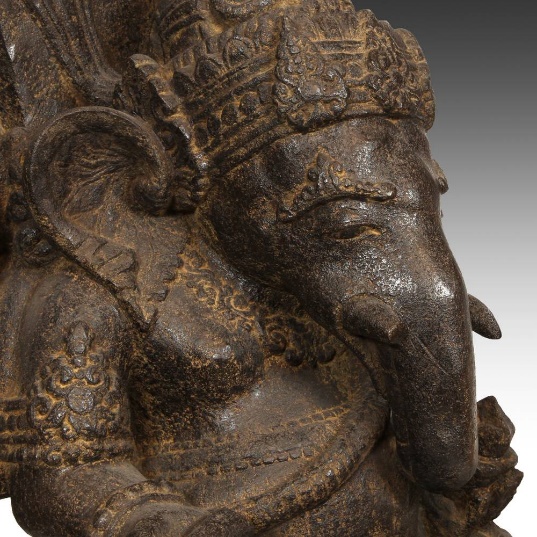 Ganesha rose to prominence in mainstream Hindu worship in the early centuries of the common era, with major iconographic forms appearing by the fifth and sixth centuries. The most famous of his many origin stories is told in the Shiva Purana. The goddess Parvati, wishing for a guardian during her bath, fashioned a son from the turmeric paste anointing her body and breathed life into him. When her husband Shiva returned and was barred from entering by this unfamiliar youth, the enraged god struck off the boy’s head. Confronted with Parvati’s grief, Shiva sent his attendants to bring back the head of the first creature they encountered, which proved to be an elephant. The elephant’s head was placed upon the boy’s body, and the resurrected child was made chief of Shiva’s Ganas, his celestial host, earning the name Ganesha, lord of the Ganas.
Iconography and Symbolism
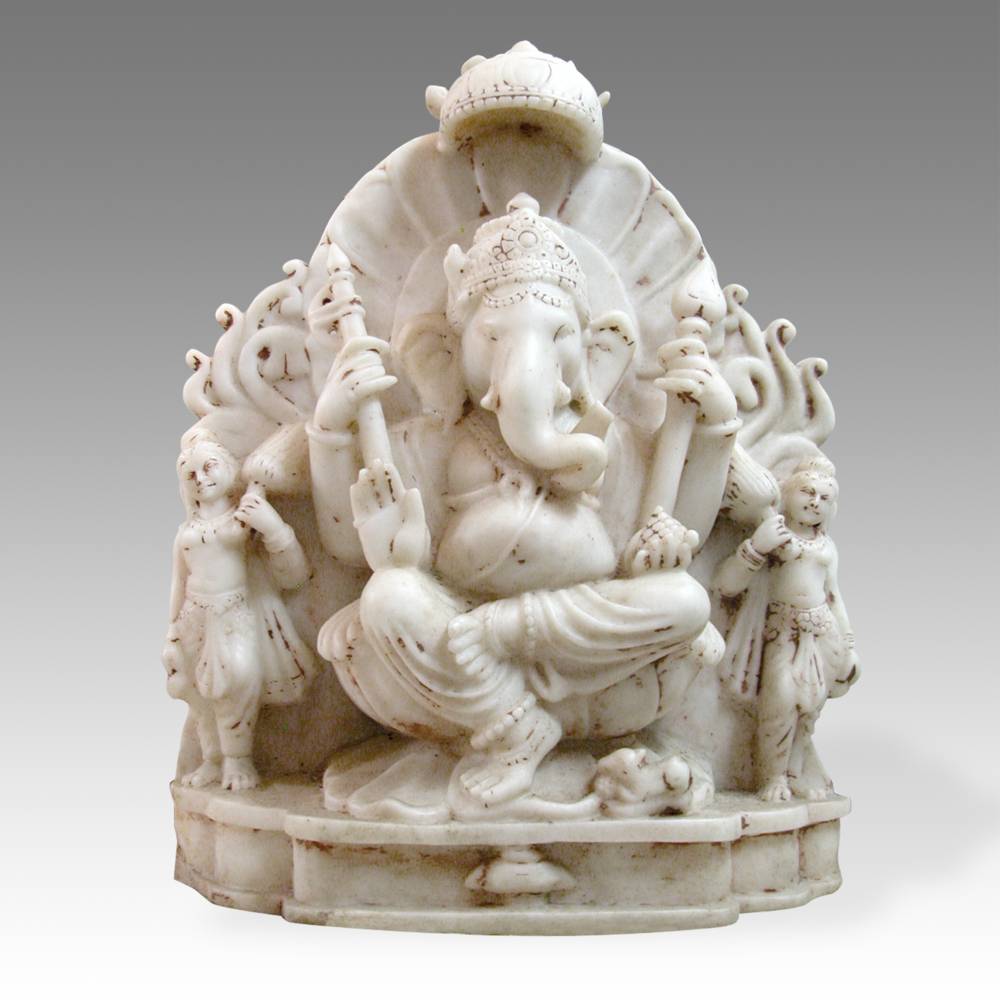
Every element of Ganesha’s form carries meaning. His large head signifies wisdom and the capacity for great thought. His broad ears listen attentively to all who pray, and his small eyes see with focused concentration. His single intact tusk, the other broken, recalls the legend of his writing the Mahabharata epic at the dictation of the sage Vyasa, when he snapped off the tusk to use as a pen. His ample belly contains the entire universe. The four arms typically hold a noose for binding 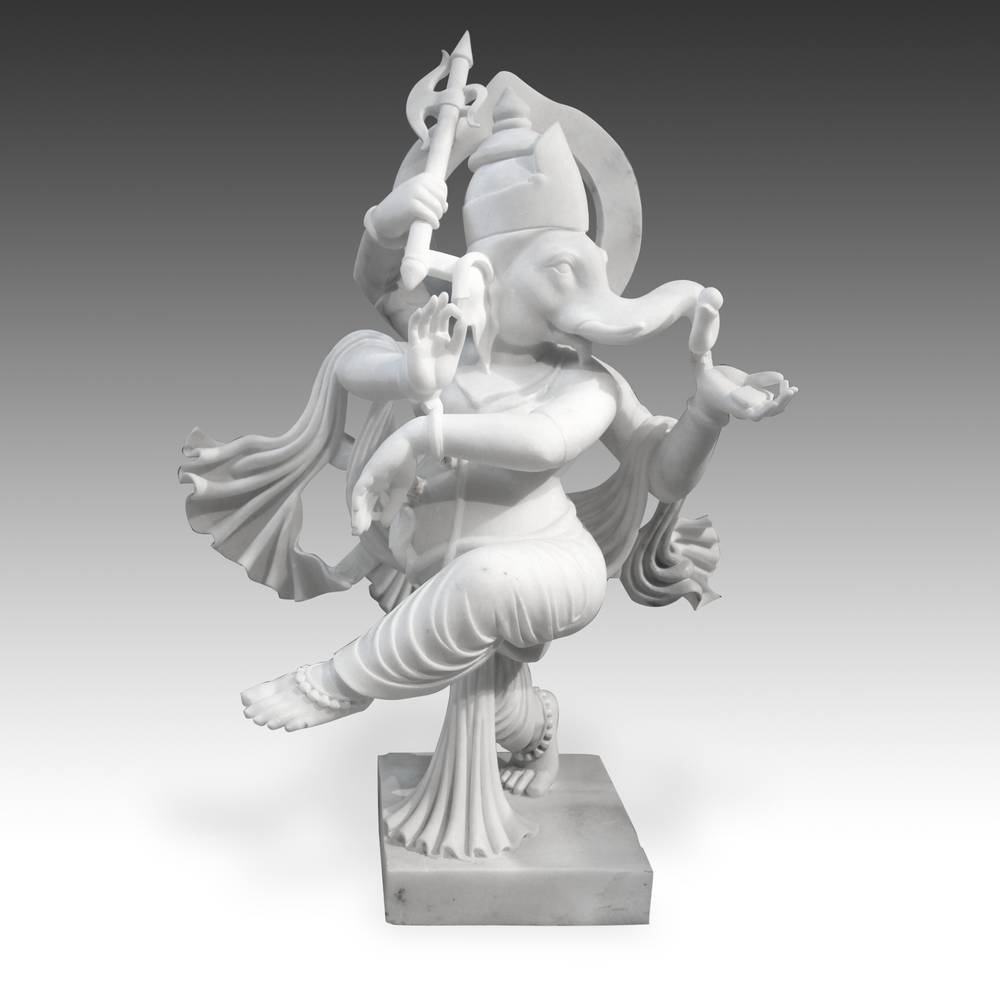 obstacles, a goad for prodding the devotee toward truth, his own broken tusk, and a sweet modaka dumpling representing the rewards of a spiritual life. The tiny mouse beneath him symbolizes the conquest of desire and ego, demonstrating that even the small can be vehicles of the great.
Significance Across Cultures
 Ganesha is worshipped in homes and temples across India, Nepal, Sri Lanka, and the Hindu diaspora, with the ten-day festival of Ganesh Chaturthi drawing millions of devotees in late summer. He also appears in Buddhist contexts in Tibet, Japan, and Southeast Asia, often as a protector deity. As the embodiment of intellect, prosperity, and the auspicious beginning, Ganesha remains a vital and joyful presence in the religious life of more than a billion people.
Tantric Ganesh in Makrana Marble from Primitive – Chicago
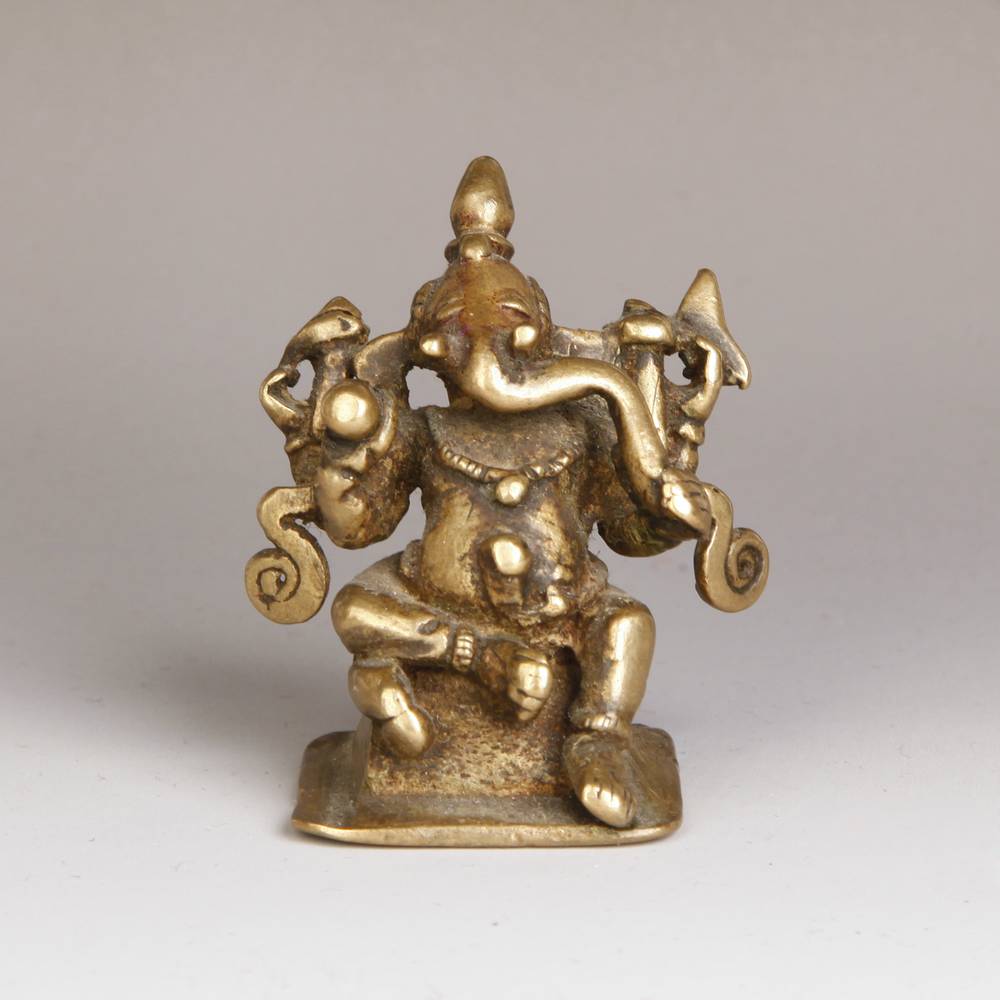
Pilgrimage Bronze from Primitive – Chicago
Ganesh with His Mouse as His vehicle – Primitive Collection