The Kaka people — also known as the Yamba — inhabit the remote highland forests of central and northwest Cameroon, in a mountain range in the Northwest Province, just south of the Nigerian border, where seventeen villages within a thirty-kilometer radius remain accessible only by four-wheel drive or on foot. Numbering approximately 188,000, they belong to the Bantu, Central-Congo people cluster and practice animism as their primary religion — a worldview in which natural entities, including animals, plants, and inanimate objects, are understood to possess a spiritual essence.
Ceremonial Porcupine Tunic of the Kaka People, Cameroon
The Kaka people — also known as the Yamba — inhabit the remote highland forests of central and northwest Cameroon, in a mountain range in the Northwest Province, just south of the Nigerian border, where seventeen villages within a thirty-kilometer radius remain accessible only by four-wheel drive or on foot. Numbering approximately 188,000, they belong to the Bantu, Central-Congo people cluster and practice animism as their primary religion — a worldview in which natural entities, including animals, plants, and inanimate objects, are understood to possess a spiritual essence.
The Kaka, like many of their neighbors, are traditional animists, and this religion is deeply rooted in their ethnic identity. Dance forms part of most religious ceremonies and rituals, accompanying births, funerals, and the invocation of ancestral spirits to cure illness, increase fertility, and bring good fortune.
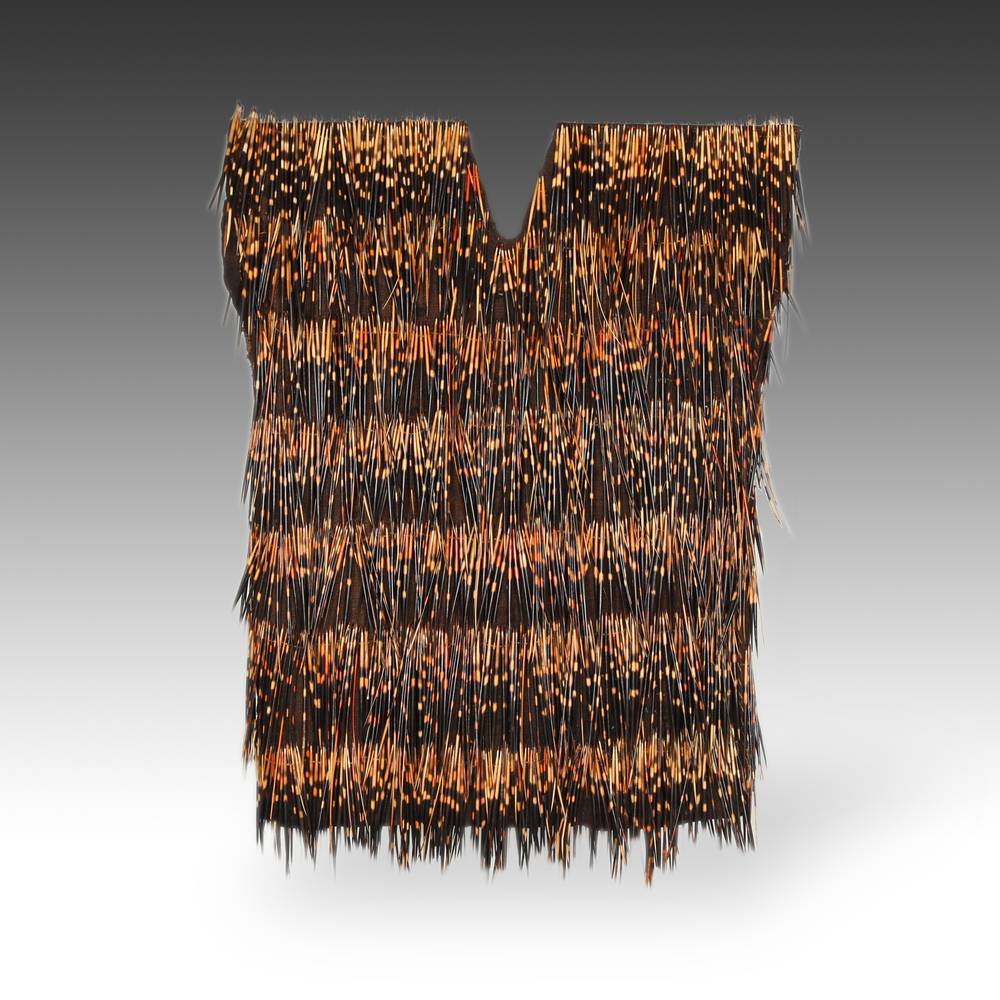 At the center of Kaka ceremonial life is a profound concern with spiritual protection. Kaka religion is largely concerned with protection from witchcraft and the undue influence of evil spirits. It is from this preoccupation that the porcupine tunic emerges as one of the most striking objects in West and Central African material culture.
The tunic is completely covered in porcupine quills, front and back, attached to a woven fiber base. Much in the same manner that a porcupine protects itself, the jacket was meant to protect the dancer from malevolent spirits and unseen influences. The symbolism is direct and powerful — the porcupine’s natural defense mechanism is transferred onto the human body, transforming the wearer into a being simultaneously of this world and the spirit world. The quills serve not merely as decoration but as a kind of spiritual armor, each one a barrier against forces that cannot be seen or named.
Members of the Ntsham society — formed by respected elders — dance wearing such garments to bring about spiritual possession, allowing them to more effectively intercede on behalf of their community. The tunic is therefore inseparable from the act of trance and embodied ritual; it does not exist as a passive object but as an active instrument of ceremony, worn in motion, alive in dance.
Porcupine tunics from the Kaka people are quite rare because of their active function in religious practice. Unlike objects created for trade or display, these tunics were used until worn, repaired, and used again — making surviving examples particularly significant. Those that have entered museum and private collections, primarily dating from the early to mid-twentieth century, represent a material record of a spiritual tradition that has endured despite generations of missionary contact. Although many Yamba today identify as Christian, a significant proportion continue to hold traditional beliefs as a means of protection against evil.
The porcupine tunic stands as one of the most eloquent expressions of that continuity — a garment in which the boundary between the natural world and the sacred is quite literally worn on the body.