Heaven’s Beads
Dzi Beads: History and Significance
Heaven’s Beads
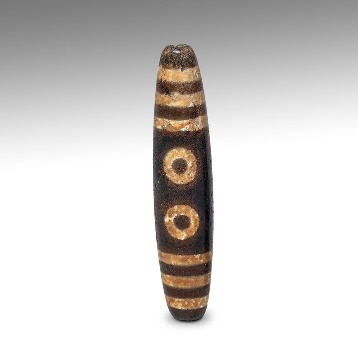 Dzi beads, pronounced “zee,” are among the most mysterious and treasured objects in the Tibetan cultural world. Cylindrical or barrel-shaped stones, typically dark brown or black with striking ivory-white patterns of stripes, dots, and so-called eyes, they have been worn for centuries by Tibetans, Bhutanese, Ladakhis, and Himalayan peoples as protective amulets of extraordinary spiritual power. Tibetan tradition holds that genuine dzi were not made by human hands at all but were left behind by gods, fell from the heavens as meteorites, or were transformed from supernatural insects when discovered by mortals. Such beliefs have given rise to the popular Tibetan name pure dzi, sometimes translated as heaven’s bead.
Origins and Manufacture

 Modern scholarship places the origins of dzi production in the broader region encompassing the Tibetan Plateau, the Indus and Mesopotamian valleys, and the western Himalayas, with the oldest examples likely dating from somewhere between 2,000 and 4,000 years ago. The beads are made from agate, chalcedony, or similar banded stones. Their distinctive patterns are achieved through an ancient etching technique in which natural alkaline solutions, often made from soda ash or plant juices, are painted onto the stone’s surface and then heated, causing the treated areas to whiten and the protected areas to darken. The technique appears to have been lost or abandoned in antiquity, and authentic old dzi can no longer be reproduced exactly with modern methods, which contributes greatly to their rarity and value.
Symbolism and Spiritual Power
Dzi are classified by the number and arrangement of eyes, the round circular markings believed to be the source of the bead’s protective force. A nine-eyed dzi is considered the most powerful, embodying the nine vehicles of Vajrayana Buddhism and conferring profound blessings on its wearer. Other patterns include the lotus, the tiger tooth, the longevity knot, and the auspicious vase, each carrying its own meaning. Tibetans traditionally believe that dzi protect against misfortune, illness, and negative spiritual influences, and that the beads  choose their owners rather than the reverse. A dzi found in the earth or inherited from an ancestor is considered especially auspicious, while a chipped or broken bead is thought to have absorbed harm on behalf of its wearer.
Cultural Legacy
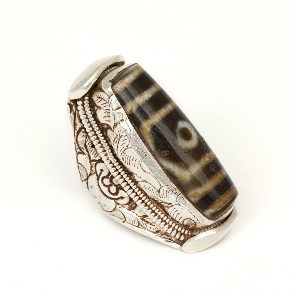 Genuine antique dzi are passed down as family heirlooms for generations and command extraordinary prices on the international market, with exceptional examples selling for hundreds of thousands of dollars. They are commonly strung alongside coral, turquoise, and silver to form the elaborate necklaces worn by Tibetan women on festival days. As both sacred amulet and cultural treasure, the dzi bead remains a living link between the spiritual imagination of the Himalayas and the ancient artisans whose techniques are still not fully understood.