A Cradle of Borneo
The Dayak Beaded Baby Carrier: History and Significance
A Cradle of Borneo
Among the most beautiful and meaningful objects produced by the Dayak peoples of Borneo is the beaded baby carrier, known as ba’ among the Kenyah, ben’ing aban among the Kayan, and by various other names across the island. Used to carry infants on a mother’s back during work in the fields, journeys along the rivers, or daily life in the longhouse, the carrier is at once a practical cradle and a profoundly sacred object. It is most strongly associated with the upriver peoples of central Borneo, particularly the Kenyah, Kayan, Modang, and related groups whose elaborate beadwork traditions have been admired for generations.
Construction and Materials
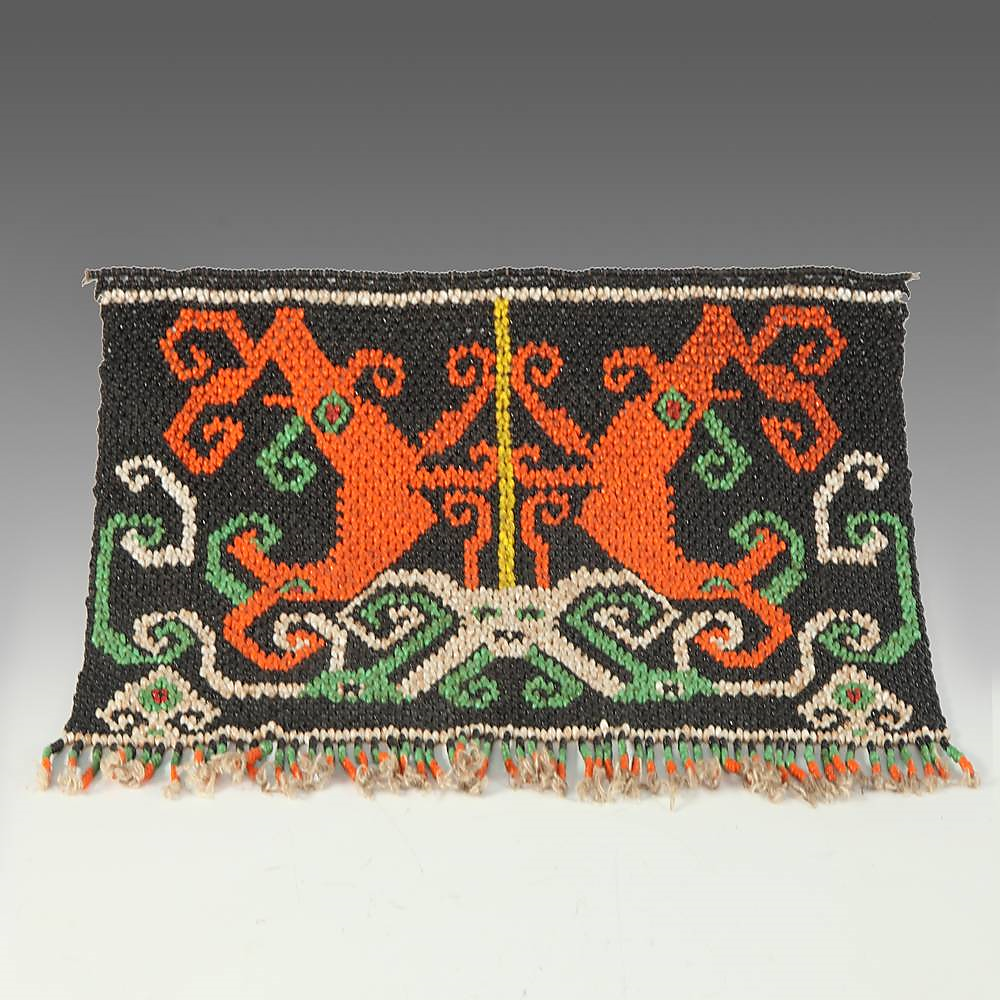 A traditional baby carrier consists of a wooden seat board carved from a single piece of hardwood, bound with rattan and covered on the outer face with a richly decorated panel. The panel is the heart of the work. Skilled women spend months, sometimes more than a year, threading thousands of tiny glass beads, originally imported from Venice, Bohemia, and China through long-established trade networks, into intricate patterns. The completed panel is mounted onto the carrier along with shoulder straps and is often further adorned with cowrie shells, old coins, leopard or bear claws, animal teeth, and tiny brass bells that jingle softly as the mother moves.
From the Primitive Collection – Chicago
Symbolism and Spiritual Protection
The decorations are far from purely ornamental. In Dayak belief, infants are spiritually vulnerable, and the carrier is designed to shield the child from malevolent forces. The beaded panels typically depict powerful protective beings such as the aso, a stylized dragon-dog hybrid, the hornbill, the tiger, and faces of guardian spirits, all rendered in bold curvilinear motifs. The materials attached to the carrier carry their own meanings, with bells thought to startle wandering spirits, animal teeth and claws drawing on the strength of the creature they came from, and old coins symbolizing wealth and longevity. The complexity of the design also signals social standing. Among the Kenyah and Kayan, only families of the aristocratic class were historically permitted to use carriers featuring full human or tiger faces, while commoners used simpler geometric patterns.
Legacy and Living Tradition
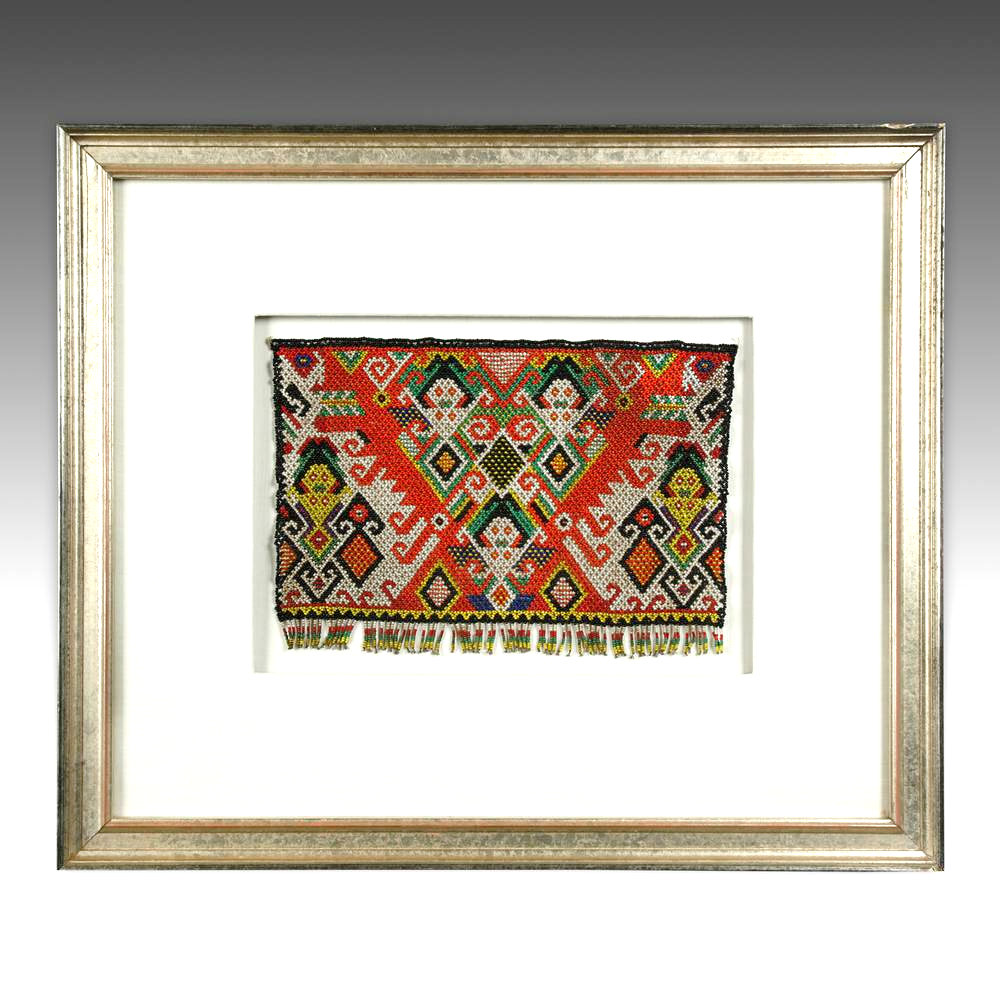 Antique Dayak baby carriers are now prized by collectors and museums worldwide, with fine examples held in the Sarawak Museum, the Tropenmuseum, and the Metropolitan Museum of Art. Within Borneo itself, the tradition continues, though with modern materials and shifting symbolism. Carriers remain treasured family heirlooms, passed from mother to daughter, and they continue to be made for weddings, festivals, and important community celebrations. Each one stands as a vivid expression of Dayak artistry, maternal devotion, and the enduring belief that beauty itself can shelter and protect a child.
Example of Dayak Beadwork – Primitive Chicago