Sacred Furniture of the Dharma
Painted Temple Cabinets of Tibetan Monasteries
Sacred Furniture of the Dharma
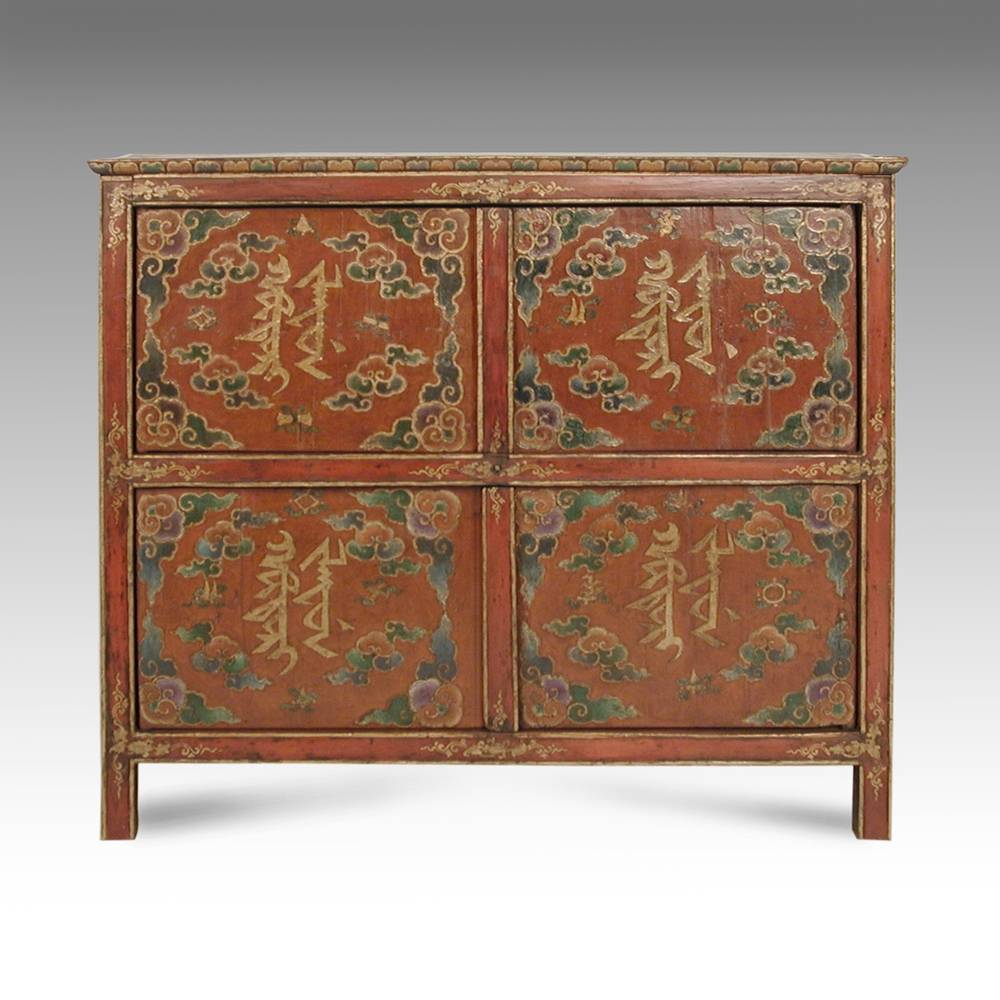
Within the dimly lit assembly halls and inner shrines of Tibetan monasteries, the eye is drawn not only to the great gilded statues and silken thangkas but also to the splendidly painted wooden cabinets that line the walls. Known generally as choktse for low altar tables and as gam for tall storage chests and shrine cabinets, these pieces of sacred furniture are far more than utilitarian objects. They serve as offering altars, manuscript libraries, repositories for ritual implements, and supports for the small bronze images and butter lamps that animate daily worship. Their painted surfaces extend the visual world of Tibetan Buddhism into every corner of the temple, ensuring that no space within the monastery is unconsecrated.
 Origins and Function
 The tradition of decorated monastic furniture developed in tandem with the establishment of the great monasteries of Tibet from the eleventh century onward, drawing on artistic conventions imported from India, Nepal, and China. By the fifteenth and sixteenth centuries, distinctively Tibetan styles had matured at centers such as Sera, Drepung, Ganden, and Tashilhunpo. Different cabinet forms served different ritual purposes. Long altar tables held offering bowls of water, butter lamps, and ceremonial cakes called torma. Tall vertical cabinets housed bundles of woodblock-printed scriptures wrapped in silk. Small portable shrines, sometimes carried in procession, contained protective deities. Aristocratic patrons frequently commissioned such furnishings as merit offerings to monasteries with which their families had ties.
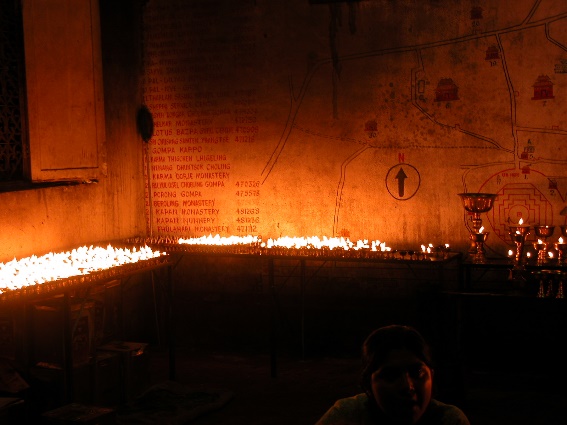
Temple Oil Lamps burning throughout the night in Nepalese Monastery
From the Collection of Tibetan Monastery Cabinets at Primitive – Chicago
Materials and Decoration
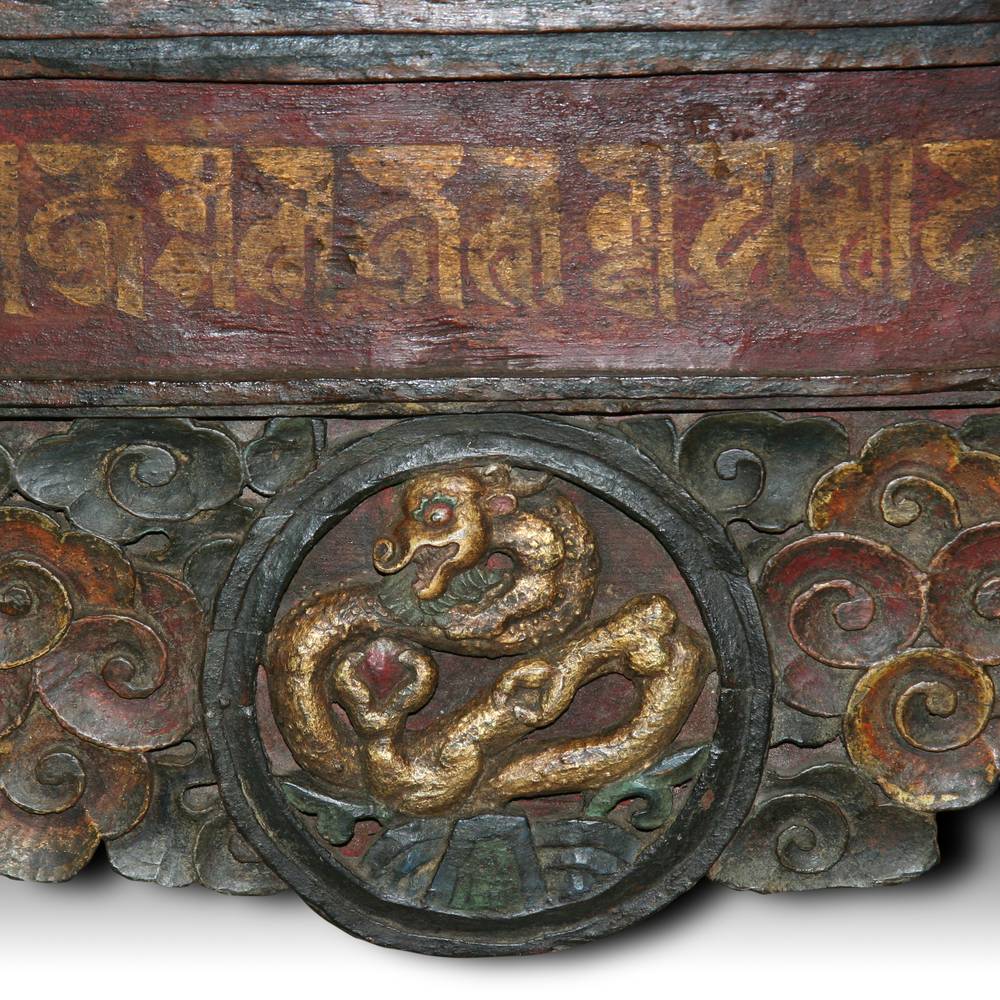
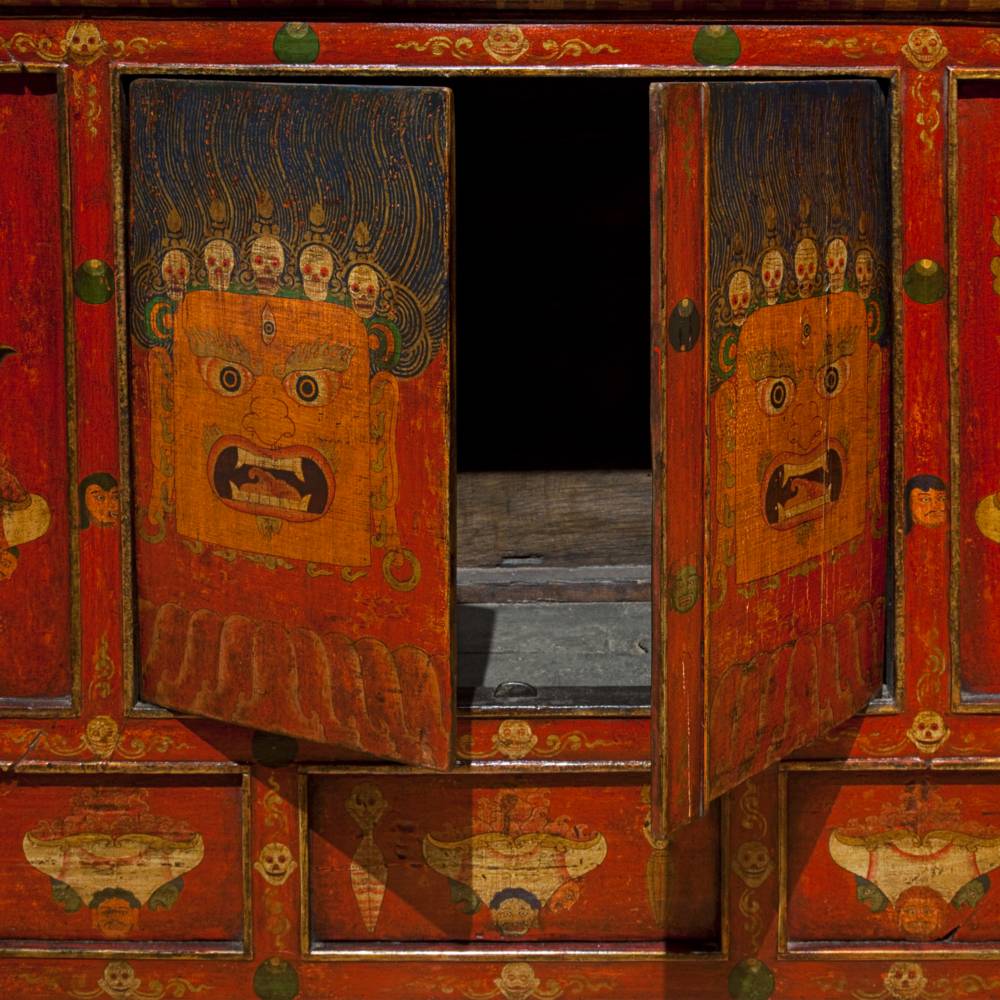 Tibetan temple cabinets are typically constructed from softwoods such as pine, juniper, or cedar, jointed without nails using mortise-and-tenon techniques and stiffened with carved frames. The wooden surface is first sealed with a thin gesso of chalk and animal-hide glue, then painted with mineral pigments of striking richness. Cinnabar reds, malachite greens, lapis blues, and orpiment yellows form the dominant palette, set against backgrounds of deep red or black. Real gold is applied to highlight contours, halos, and ornaments. Iconographic subjects include the eight auspicious symbols, the four guardian kings of the directions, dragons coiling among clouds, the six symbols of long life, snow lions, and the wrathful protectors of the dharma. Doors may open to reveal interior panels painted with deities or with the goddess Palden Lhamo riding her mule across a sea of blood.
From the Collection of Tibetan Monastery Cabinets at Primitive – Chicago
 Significance and Legacy
These cabinets are devotional objects in their own right. Their imagery educates novices, protects the sacred objects within, and offers continual blessings to all who enter the hall. Following the upheavals of the twentieth century, many fine examples were dispersed and now reside in major museum and private collections worldwide, where their robust forms and brilliant pigments stand as testaments to the visual richness of pre-modern Tibetan monastic life. In monasteries throughout Tibet, Bhutan, and the diaspora, the tradition continues today, with skilled painters maintaining a craft in which beauty, faith, and function meet on every painted surface.
From the Collection of Tibetan Monastery Cabinets at Primitive – Chicago