The Toraja are an Austronesian ethnic group indigenous to a mountainous region of South Sulawesi, Indonesia, with a population of approximately 1,100,000, of whom around 450,000 live in the regency of Tana Toraja — meaning “Land of Toraja.”
The Toraja People of Sulawesi, Indonesia — A History
The Toraja are an Austronesian ethnic group indigenous to a mountainous region of South Sulawesi, Indonesia, with a population of approximately 1,100,000, of whom around 450,000 live in the regency of Tana Toraja — meaning "Land of Toraja."
Origins
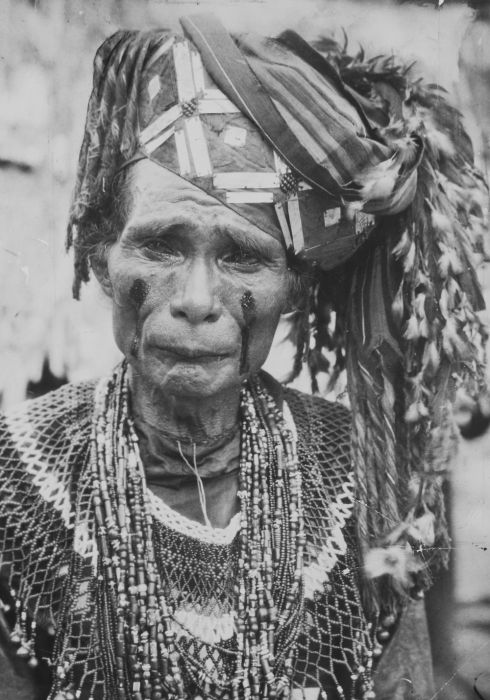 Anthropologists believe the Toraja are descendants of ancient Austronesian migrants who arrived in Sulawesi between 3,000 and 5,000 years ago, with cultural practices showing similarities with Polynesian and Melanesian groups. Muslim Indonesians — most notably the Buginese — later drove the Toraja into the interior of the island, where they built their villages on easily defended hilltops for security during warfare. The word Toraja itself comes from the Buginese term to riaja, meaning "people of the uplands," and the Dutch colonial government formally named them Toraja in 1909.
Religion and Worldview
Most of the population is today, Christian, while others are Muslim or follow local animist beliefs known as aluk — "the way." The Indonesian government has recognized the traditional animistic belief as Aluk To Dolo, meaning "Way of the Ancestors." This ancient belief system guides not only funeral rites, but daily life, agriculture, and rituals aimed at maintaining universal harmony, led by spiritual figures known as to minaa. Even among Christian and Muslim Torajans, elements of Aluk To Dolo are still followed, especially in rural areas.
Funeral Culture
The Toraja are world-renowned for one of the most elaborate death traditions on earth. The Torajans traditionally believe that death is not a sudden, abrupt event but a gradual process toward Puya — the land of souls and afterlife. This belief culminates in the Rambu Solo funeral ceremony — a grand festival lasting from three to ten days, during which entire villages unite to honor the deceased with prayers, sacrifices, and performances. Sacred water buffalo, symbols of wealth and spiritual power, are sacrificed to guide the soul to Puya.
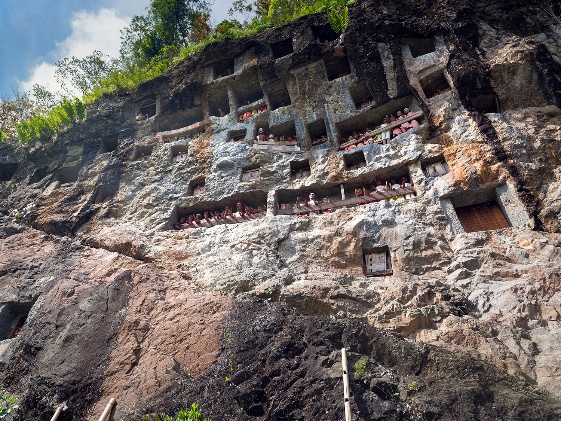 The funeral for a member of the nobility can last up to seven days and may involve the slaughtering of between 50 and 100 buffaloes. Wooden human figures called tau tau accompany the deceased on their journey from the funeral house to the burial ground, watching over both the living and the dead. Burials are carved directly into cliff faces, sometimes more than 30 meters high — a tradition that protects the dead from desecration and connects them permanently to the landscape.
Architecture and Art
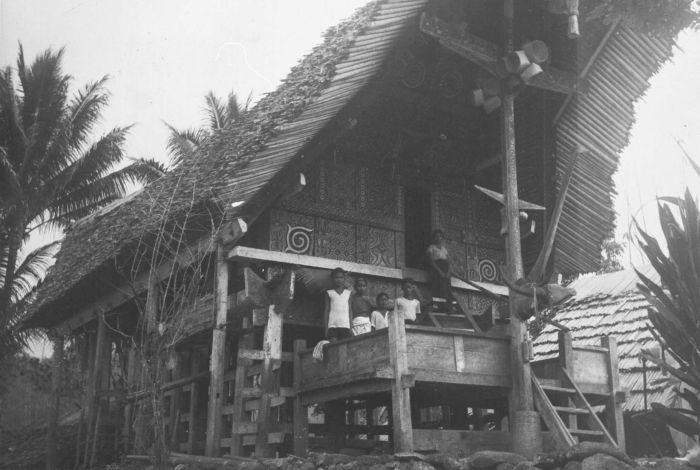
The Toraja are also renowned for their massive peaked-roof traditional houses known as tongkonan and their colorful, intricate wood carvings. Each carving holds unique meaning — the buffalo symbolizes strength, the rooster vigilance — and these artistic traditions form a visual language connecting living to ancestral belief.
Legacy
Before the 20th century, Torajans identified with their villages rather than with a shared ethnic identity. It was Dutch colonization and Christianization that forged a broader sense of Torajan peoplehood. Today, their cultural traditions have made Tana Toraja one of Indonesia’s most visited destinations — a place where, uniquely, it is death, not life, that lies at the very heart of society.