An Island Apart
The Sumbanese People: History and Significance
An Island Apart
The Sumbanese are the Indigenous inhabitants of Sumba, a rugged island lying south of Flores in the Lesser Sunda chain of eastern Indonesia. Now part of the East Nusa Tenggara province, the island is home to roughly 800,000 people divided between two main administrative regions, East Sumba and West Sumba, the latter further subdivided in recent decades. Although the population shares a common cultural foundation, the Sumbanese speak a cluster of related but distinct Austronesian languages, including Kambera in the east and Wewewa, Lamboya, and Anakalang in the west. Sumba’s relative isolation, with its dry savannahs, limestone hills, and modest natural harbors, allowed it to remain outside the major trade and political networks that shaped much of Indonesia, preserving traditions found almost nowhere else in the archipelago.
Society and Way of Life
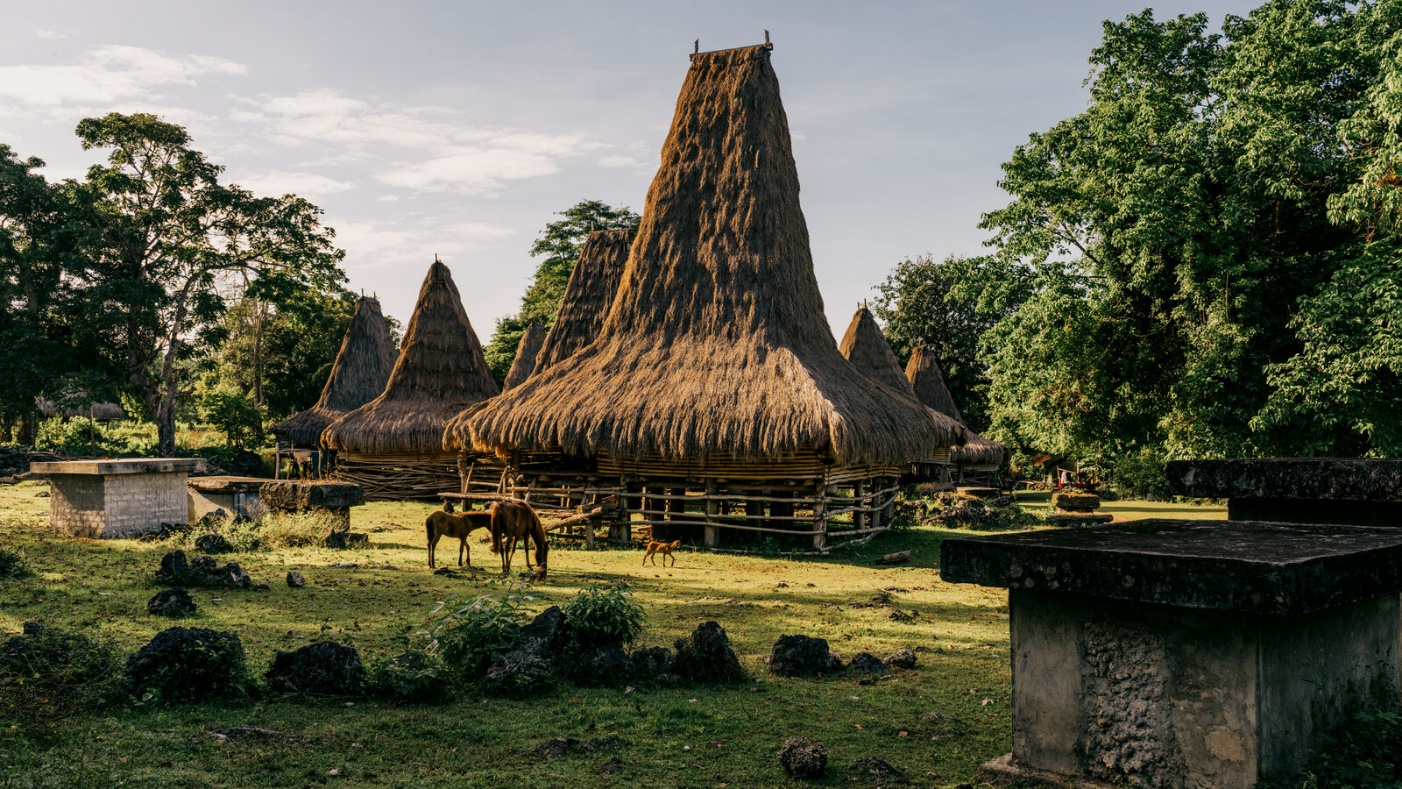 Traditional Sumbanese society is highly stratified, organized into three broad classes: the Maramba aristocracy, the Kabihu commoners, and the Ata, who were historically bonded servants. Villages are typically perched on hilltops for defense and arranged around a central plaza of massive stone megaliths, the tombs of clan ancestors. Houses rise on stilts beneath dramatic peaked thatched roofs, with the upper loft serving as a sacred space where ancestral heirlooms are kept. The Sumbanese economy combines subsistence farming of rice, maize, and cassava with the raising of horses, water buffalo, and pigs, all of which carry profound ritual as well as economic value. Sumba’s sturdy native horses, the sandalwood pony, gave the island its long-standing reputation as the Land of Horses.
 Marapu, Megaliths, and Ritual
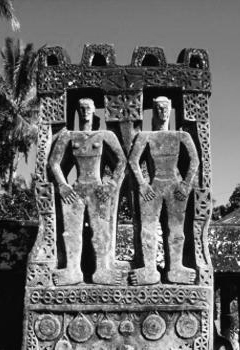
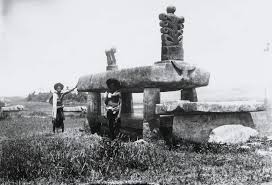 At the heart of Sumbanese life is Marapu, the Indigenous religion that venerates ancestral spirits and a supreme creator. Although large numbers of Sumbanese today identify as Christian, Marapu beliefs continue to shape rituals surrounding birth, marriage, death, and the agricultural calendar. The most spectacular expression of this worldview is the Pasola, an annual mock battle on horseback held in West Sumba, in which mounted warriors hurl wooden spears at one another to ensure a good harvest. Funerary rites involve the quarrying and dragging of immense stone slabs to build clan tombs, ceremonies that may unfold over months and require the sacrifice of dozens of animals to honor the deceased.
Significance Today
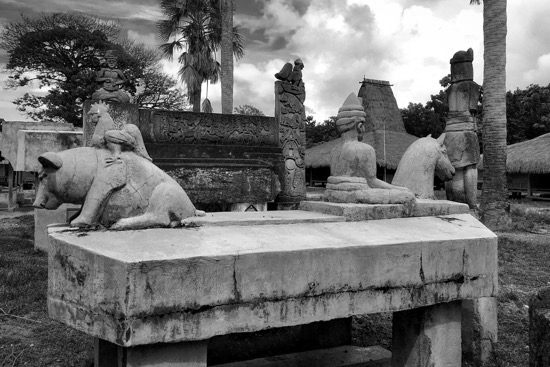
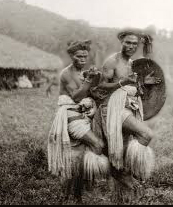 The Sumbanese are renowned beyond Indonesia for their extraordinary ikat textiles, megalithic architecture, and living ritual traditions, all of which have drawn anthropologists and travelers for more than a century. Despite ongoing challenges of poverty and climate vulnerability, the Sumbanese continue to sustain a remarkably intact heritage, offering one of the clearest windows in modern Asia onto an ancient Austronesian world.