History and Significance of West Africa’s Royal Textile
Nwentoma: The Kente Ceremonial Cloth
History and Significance of West Africa’s Royal Textile
Origins and Name
Among the Akan peoples of Ghana, kente cloth is known as nwentoma, which translates simply as “woven cloth.” The name kente itself derives from kenten, the Asante word for basket, a reference to the cloth’s interlaced, basket-like surface created by its earliest weavers using raffia and palm-fiber threads. Strip-woven textile traditions in the region reach back more than a millennium, with some scholars tracing the practice to weaving cultures established in West Africa as early as the ninth century. The cloth as it is known today, however, took its definitive form among the Asante (Ashanti) of Ghana and the Ewe of Ghana and Togo.
The Asante Origin Legend
Asante oral tradition holds that two hunters from the village of Bonwire encountered the spider Ananse spinning an extraordinary web in the forest. Marveling at its layered geometric beauty, they studied the design and adapted it on a wooden loom, presenting their finished cloth to Asantehene Osei Tutu, the first ruler of the Asante Empire. The king adopted nwentoma as a royal fabric, and Bonwire became, and remains, the principal center of Asante kente weaving.
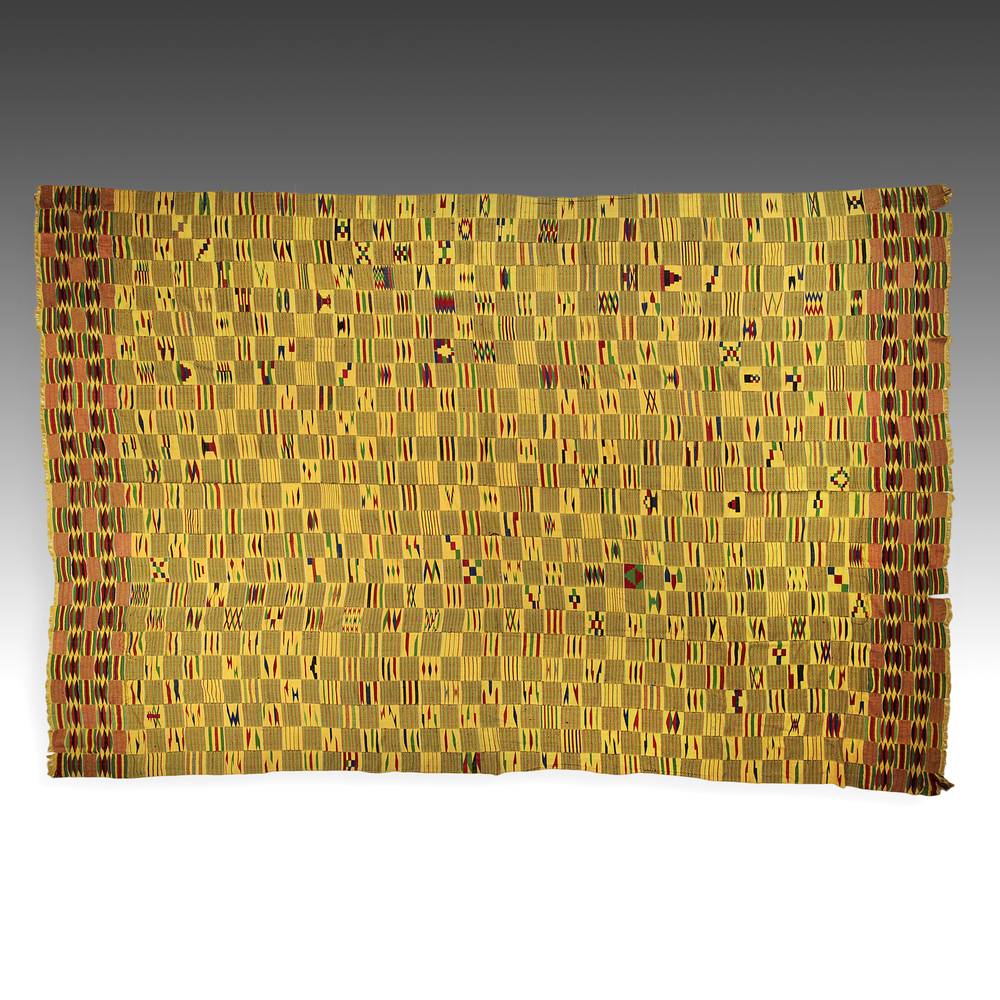 Construction and Materials
Kente is produced on a narrow, double-heddle treadle loom that yields long strips roughly four inches wide. These strips are then cut and hand-stitched edge to edge to form a complete cloth large enough to wrap toga-style around the body. Early weavers used cotton; by the eighteenth century, trans-Saharan and Atlantic trade brought lustrous Italian and French silks into the workshops at Kumasi, producing the brilliant, jewel-toned cloths most associated with Asante royalty. Ewe kente, woven further east, traditionally favors cotton and wool and often incorporates representational motifs such as animals, hands, and tools alongside the geometric forms.
From the broad collection of Kente Cloth – Primitive – Chicago
Symbolism and Ceremonial Use
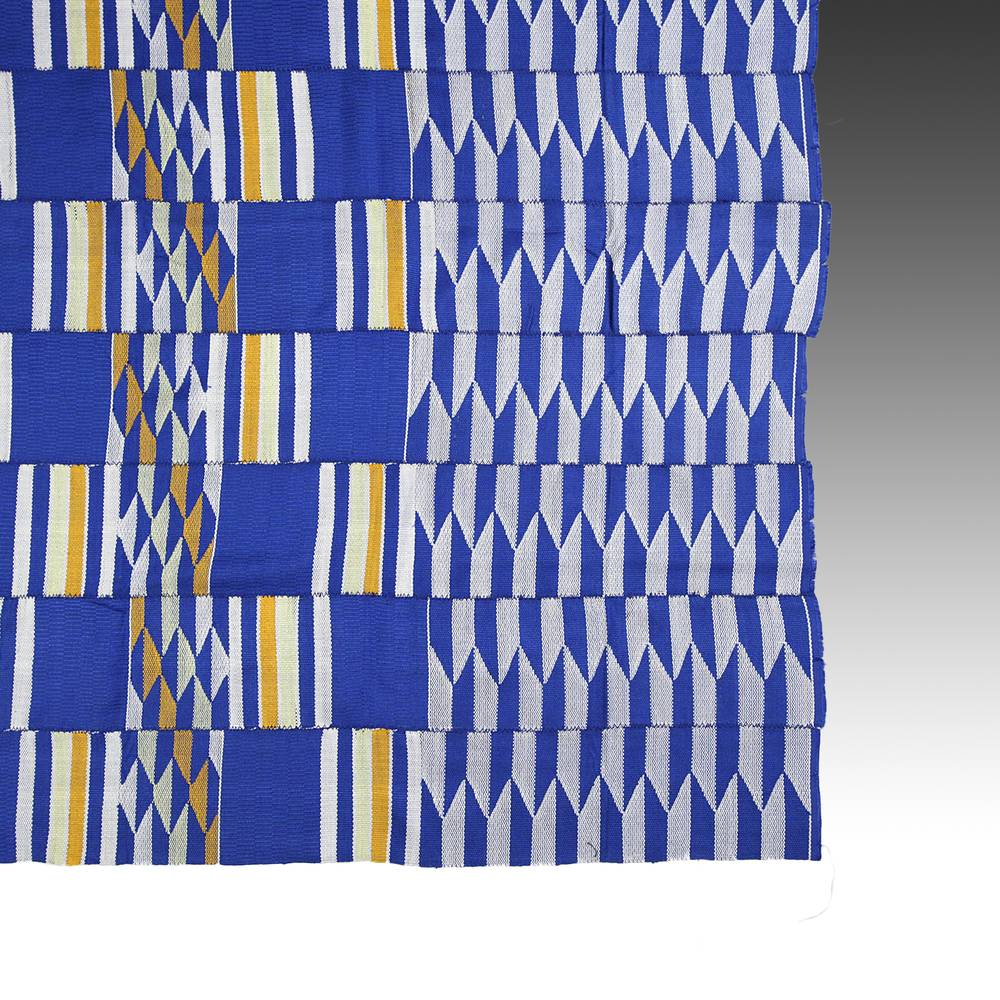 Every aspect of nwentoma carries meaning. Each named pattern records a proverb, historical event, or moral teaching, and the colors themselves are read as a coded language: gold for royalty and wealth, yellow for fertility, green for renewal and growth, blue for harmony and the heavens, red for political and spiritual feeling, white for purity and joyous occasions, and black for ancestral remembrance and maturity. Originally reserved for the Asantehene and his court, kente was worn only at the most important state ceremonies, sacred rites, royal funerals, and festivals. The cloth also appeared in shrines to the abosom, the deities of the Akan world, as a marker of spiritual presence.
Modern Significance
Today nwentoma is worn at weddings, naming ceremonies, graduations, and funerals across Ghana, and has become a global emblem of African heritage and pride. African American communities and the wider diaspora use kente stoles to mark academic achievement and cultural identity, carrying the cloth’s royal lineage into new ceremonial contexts while honoring its origins on the looms of Bonwire.
From the broad collection of Kente Cloth – Primitive – Chicago