Cultural History and Significance of a West African Nation
The Ewe People
Cultural History and Significance of a West African Nation
Origins and Migration
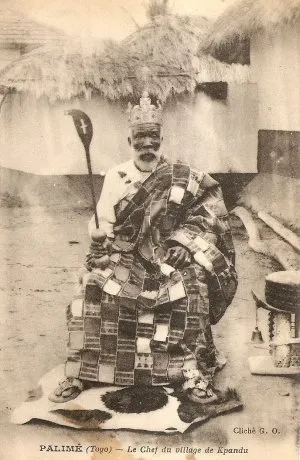 The Ewe, pronounced “Ev-ay,” are a Gbe-speaking people of West Africa whose homeland today spans southeastern Ghana, southern Togo, and southwestern Benin. Numbering roughly seven million across the region, they trace their origins through a long migration story that begins near the Niger River and the Yoruba town of Ketu. Pressed westward by the expansion of the Yoruba and the Oyo Empire, their ancestors moved first to Tado on the Mono River and then to Notsie in central Togo, which they reached around 1500. Notsie became the great gathering place of the Ewe, holding for them a foundational significance comparable to that of Egypt in the Hebrew tradition.
The Escape from Notsie
Ewe oral history centers on the dramatic escape from the walled city of Notsie under the tyrannical King Agokoli, who forced the people to perform impossible tasks and ordered the killing of their elders. Guided by the hidden wise man Tegli, the Ewe devised a cunning plan: women, while doing laundry, repeatedly threw water against one section of the city wall until the mud softened enough to be cut through. Women, children, and the elderly slipped out first, while the younger men and drummers followed walking backwards so that their footprints would suggest the community was entering rather than leaving. Once free, the Ewe dispersed across the Volta region, settling the lands they occupy today.
Society and Religion
Unlike their Ashanti neighbors, the Ewe never formed a single centralized kingdom. Instead, they organized themselves into many independent towns, each governed by its own chief and council of elders, bound together by shared language and tradition. Inheritance and succession flow through patrilineal lines, and communal labor remains valued over individual gain. Traditional Ewe religion, known as Vodun, recognizes a supreme creator, Mawu, often paired with the male counterpart Lisa, alongside countless lesser deities and ancestral spirits who inhabit the natural world. This sophisticated theology gave rise to the broader Vodun complex that spread through the Atlantic slave trade to Haiti, Cuba, and the Americas. Today many Ewe are Christian, while traditional practice continues in shrines and festivals.
 Drumming, Dance, and Cloth
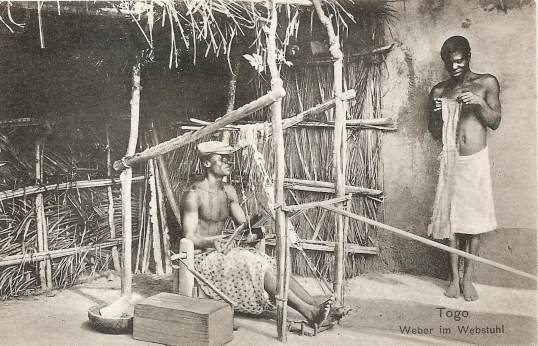
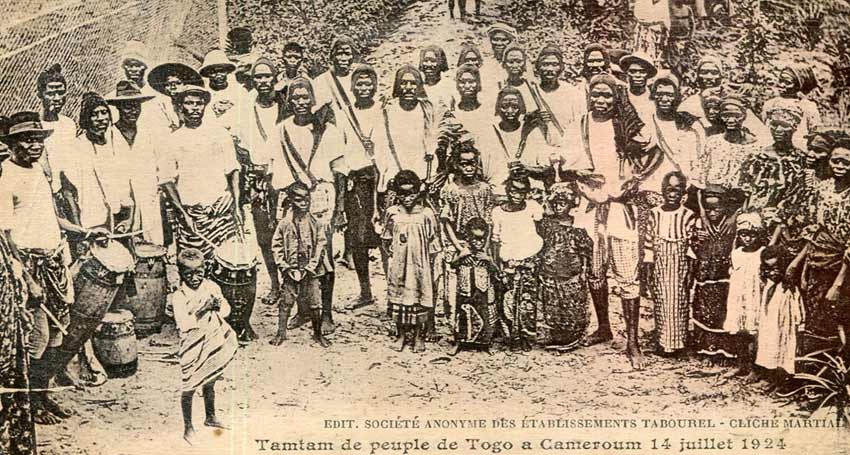 The Ewe are internationally renowned for the complexity of their polyrhythmic drumming and the dances tied to it. The Agbadza dance, originally a war movement, is now performed at festivals and funerals as a celebration of community and ancestral memory. Equally distinguished is Ewe weaving: cotton kente cloth produced in centers such as Keta and Kpetoe, often featuring figurative inlaid motifs of animals, tools, and human figures, prized worldwide as one of the highest expressions of African textile artistry.
Identity and Significance Today
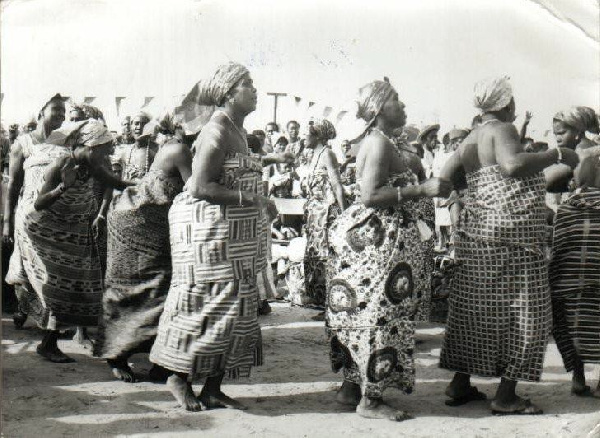 Colonial-era borders divided the Ewe between British Gold Coast and German, then French, Togoland, leaving the people split among modern Ghana, Togo, and Benin. Despite repeated movements for reunification, no single Ewe state has emerged, yet cultural unity has remained remarkably strong. Each November, the Hogbetsotso Festival, the “Festival of the Exodus,” gathers chiefs and communities in the Volta Region to commemorate the escape from Notsie with regalia, drumming, and dance. Through this annual remembrance, through Vodun, drumming, and cloth, the Ewe continue to assert one of West Africa’s most distinctive and resilient cultural identities.
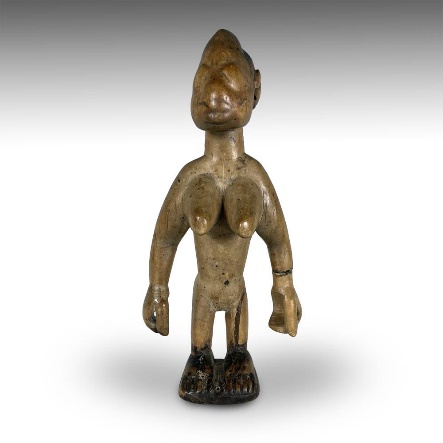
Ewe Doll – Togo, West Africa – Primitive Collection