The Portable Temple
A Traveling Shrine Featuring Citipati: History and Significance
The Portable Temple
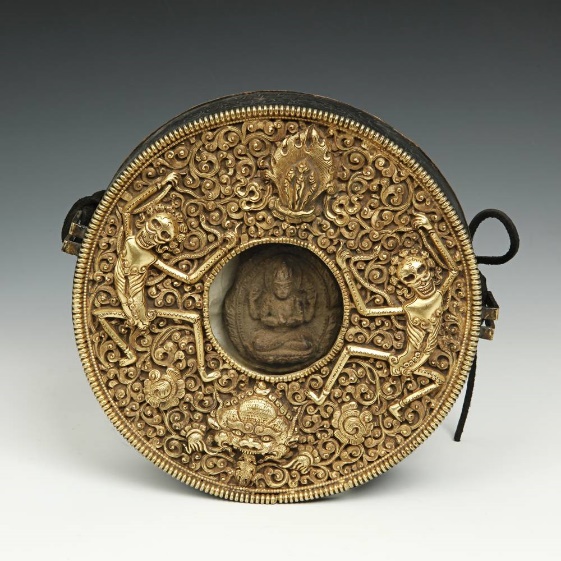 Among the most fascinating sacred objects produced in the Buddhist cultures of Tibet and Nepal is the traveling shrine, known in Tibetan as a gau when worn as an amulet box, or as a portable altar when constructed at larger scale. These shrines were created for monks, pilgrims, traders, and itinerant lamas who traversed the high passes of the Himalayas and required a means of carrying their objects of devotion with them. A traveling shrine typically takes the form of a small wooden or metal cabinet with hinged doors that open to reveal a richly painted or sculpted interior. When closed, it is compact enough to be wrapped in a cloth bundle and carried by hand or strapped to a yak or pony, transforming any place into a temporary sanctuary.
Citipati, the Lords of the Charnel Ground
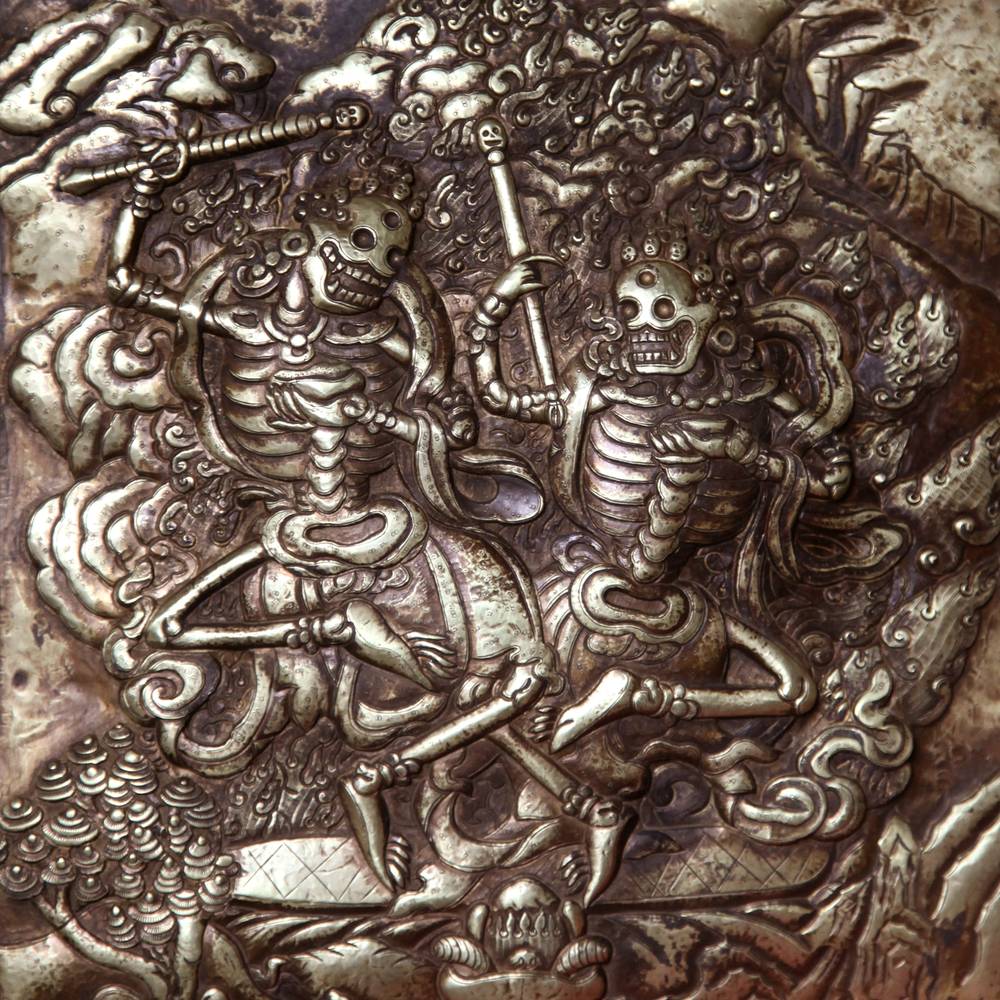 Among the most striking deities to appear within such shrines are the Citipati, a pair of dancing skeletons embracing in joyful animation. The Sanskrit name means “masters of the funeral pyre,” and the figures are envisioned as the eternal protectors of the cremation grounds where Indian and Tibetan tantric practitioners once sought the most direct confrontation with impermanence. Always depicted as a male and female pair locked in dance, crowned with five-skull diadems and brandishing skull cups and curved knives, the Citipati embody the union of bliss and emptiness that lies at the heart of Vajrayana realization. Tibetan tradition holds that they were once two ascetics so absorbed in meditation that they did not notice when a thief beheaded them; they vowed thereafter to dance forever in protection of the dharma and in vengeance against thieves and disturbers of the dead.
Form and Materials
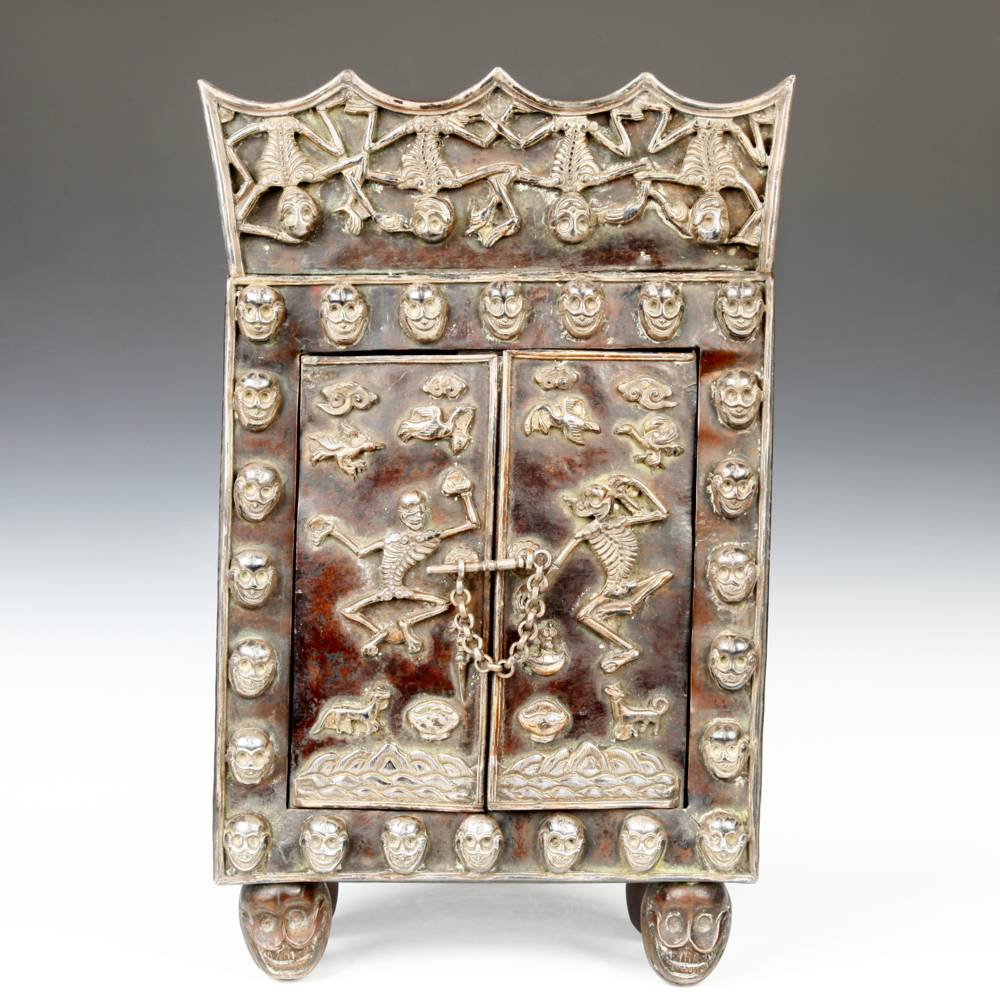 Traveling shrines featuring the Citipati are typically crafted from carved hardwood, sometimes overlaid with embossed copper or brass and inset with semiprecious stones such as turquoise and coral. The interior may contain painted panels in mineral pigments and gold, or small cast bronze figures of the dancing skeletons set against a backdrop of flames and skulls. Many examples were from the Kathmandu Valley, whose Buddhist artisans supplied much of the Tibetan religious world for centuries. The doors of such shrines often display protective deities, the eight auspicious symbols, or guardians of the four directions, while the central niche holds the Citipati themselves alongside other meditational deities.
From the Collection of Tantric Art at Primitive
Significance
For practitioners of cham masked dances and tantric meditation alike, the Citipati shrine is far more than a curiosity. It is a portable confrontation with mortality, a reminder that awareness of death is the gateway to the deepest levels of practice. Carried across mountain passes by lamas and pilgrims, opened in caves, tents, and roadside inns, such shrines transformed every stop along the journey into a place where the dharma could be practiced and the dancers of the charnel ground could be invoked as protectors of the way.