The Heartbeat of the Monastery
The Tibetan Temple Drum: History and Significance
The Heartbeat of the Monastery
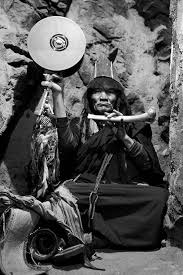
 In Tibetan Buddhism, the great ceremonial drum known as the nga is the rhythmic heart of the monastery. Far larger than the small handheld damaru, the nga is a double-headed frame drum mounted on a tall wooden stand and struck with a long curved beater. Its deep resonant boom carries through assembly halls and across mountain valleys, calling monks to prayer, marking transitions in long ritual cycles, and providing the steady underlying pulse for the elaborate musical liturgies that have shaped Tibetan religious life for more than a thousand years. Together with cymbals, long horns, oboes, and chant, the temple drum forms the sonic foundation of the cham dances and tantric ceremonies that animate the great festivals of the Buddhist calendar.
From the Collection of Temple Drums at Primitive
Origins and Liturgical Role
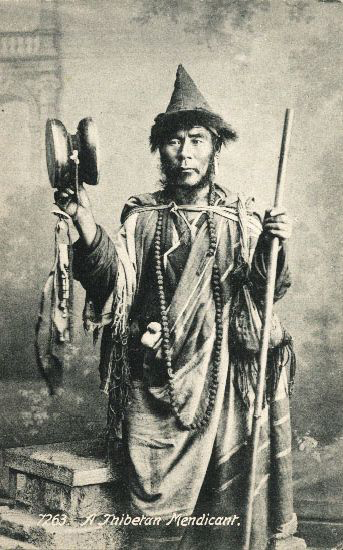 The temple drum entered Tibetan Buddhist practice through the transmission of Indian and Central Asian musical traditions during the introduction of Buddhism to the plateau in the seventh and eighth centuries. Over time, distinctly Tibetan forms developed, refined within the great monastic colleges of Sera, Drepung, Ganden, Tashilhunpo, and Samye. The drum is sounded at precise moments to mark the offering of incense, the recitation of mantras, the visualization of deities, and the dispelling of obstacles. In ceremonies dedicated to wrathful protectors, the rapid pulsing of the nga combined with the blast of long horns is believed to subdue malevolent forces and clear the space for awakened activity.
Construction and the Dorje Motif
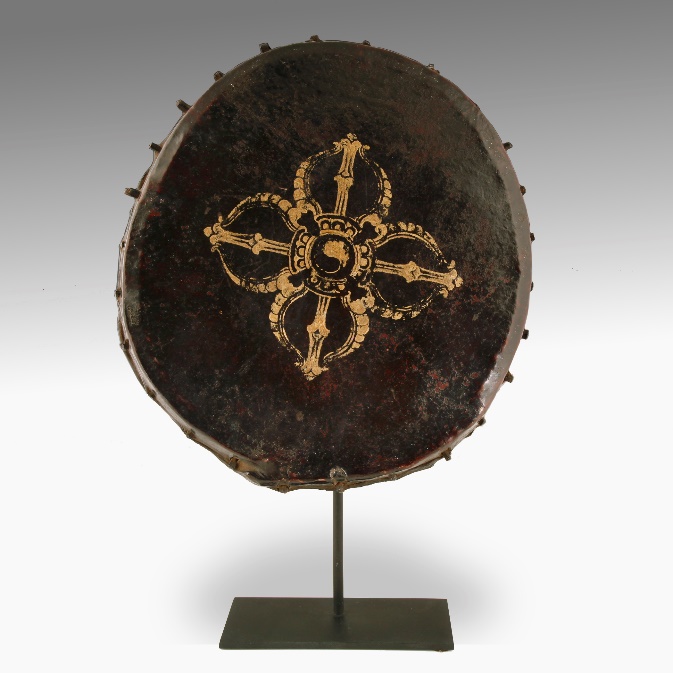
 The body of a temple drum is typically carved from a single section of hardwood such as walnut or juniper, with goat or yak hide stretched tightly over both faces and laced with leather. The wooden frame, the beater, and the supporting stand are often decorated with painted and carved ornaments drawn from Buddhist iconography. Among the most common is the dorje, the Tibetan form of the Sanskrit vajra, a stylized scepter representing the indestructible nature of awakened mind. Painted in gold against backgrounds of deep red, blue, or green, the dorje may appear at the center of the drumhead, ringed by lotus petals, or distributed in pairs at the cardinal points around the rim. Other common motifs include the eight auspicious symbols, swirling clouds, and the endless knot. Each sounding of the drum is thus understood not only as a musical event but as a ritual blessing radiating outward in all directions.
Significance and Continuing Tradition
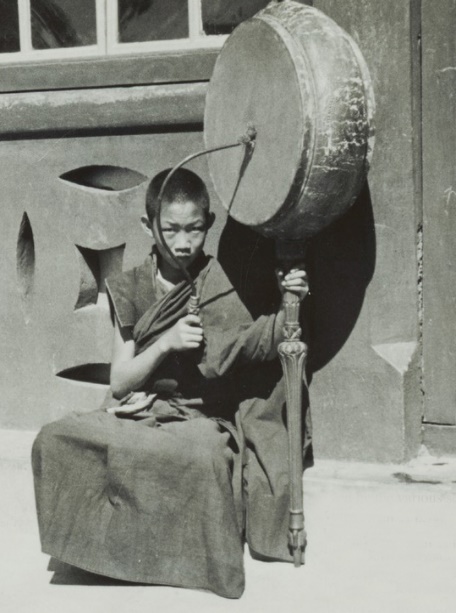 The temple drum remains central to Tibetan monastic life today, sounded daily in monasteries from Lhasa to the diaspora communities of Dharamshala, Kathmandu, and Bylakuppe. As both a finely crafted instrument and a vehicle for the dharma, it expresses the conviction at the heart of Tibetan Buddhism that sound, image, and devotion together can awaken the mind to its true nature.