Nepalese artisans occupy a unique place in the cultural and economic history of the Himalayan region, having shaped centuries of religious, architectural, and artistic life across South and Central Asia. Their craftsmanship, refined over generations, has produced some of the most enduring works of sacred art in the Buddhist and Hindu traditions, as well as everyday objects that reflect the ingenuity and spiritual sensibility of Nepalese society.
The History and Significance of Nepalese Artisans
 Nepalese artisans occupy a unique place in the cultural and economic history of the Himalayan region, having shaped centuries of religious, architectural, and artistic life across South and Central Asia. Their craftsmanship, refined over generations, has produced some of the most enduring works of sacred art in the Buddhist and Hindu traditions, as well as everyday objects that reflect the ingenuity and spiritual sensibility of Nepalese society.
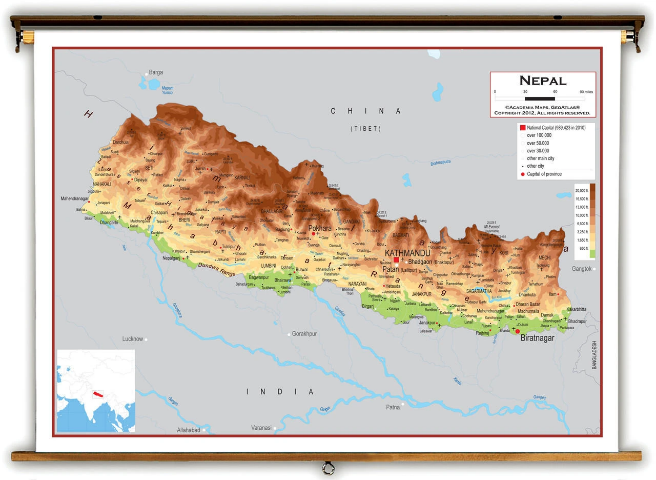
Nepal – Situated between Tibet and India; Home of the Himalayan Range

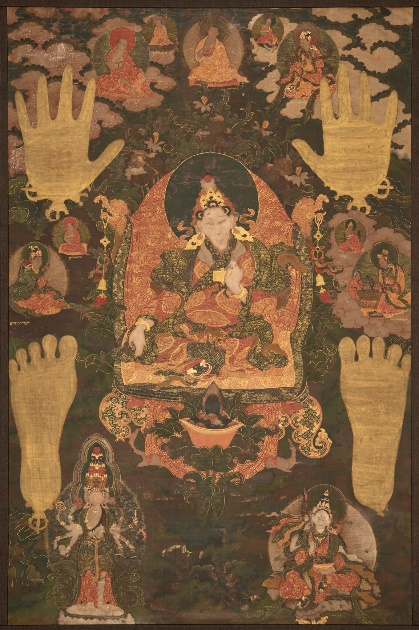 The roots of Nepalese craftsmanship stretch back more than two thousand years, with the Kathmandu Valley emerging as a particularly vibrant center of artistic production. The Newar people, indigenous to the valley, developed extraordinary skill in metalwork, woodcarving, stone sculpture, and painting. By the medieval period, Newar artisans had achieved such renown that the Tibetan emperor Songtsen Gampo and, later, the Yuan dynasty of China actively recruited them. The most celebrated of these craftsmen, Arniko, traveled to Beijing in the thirteenth century and introduced the pagoda style and advanced bronze casting to the Chinese court, leaving a lasting imprint on East Asian art and architecture.
Celebrated Nepalese craftsmen Arniko
Tibetan Emperor – Songtsen Gampo recruited highly sought after Nepalese craftsmen
Within Nepal itself, artisans gave form to the temples, palaces, and shrines that define the country’s heritage. The intricately carved wooden windows of Bhaktapur, the gilded roofs of Pashupatinath, and the lost-wax bronze statues of bodhisattvas produced in Patan all testify to a tradition that fuses technical mastery with deep devotional purpose. Thangka painters, paubha artists, and metal casters have long worked within strict iconographic conventions, yet their individual artistry continues to breathe life into each piece.
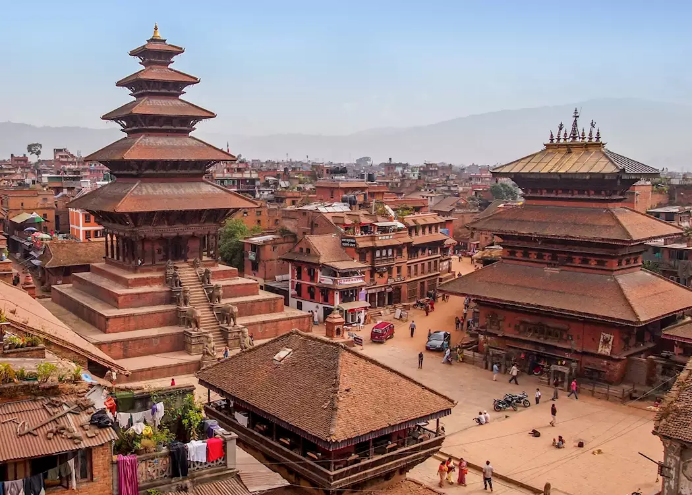 The significance of Nepalese artisans today extends well beyond aesthetics. Their work sustains religious practice for millions of Buddhists and Hindus worldwide, supplies the global market for ethical handicrafts, and provides livelihoods for tens of thousands of families. Organizations such as UNESCO have recognized several heritage sites that depend on traditional craft knowledge for their preservation, particularly after the devastating 2015 earthquake.
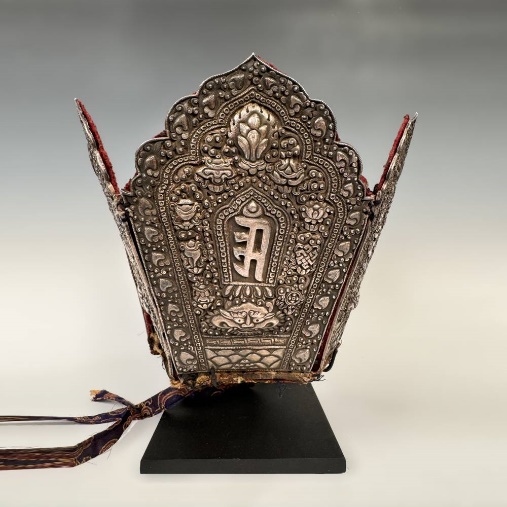 For the serious collector, seeking out works produced through authentic lost-wax casting and traditional repoussé techniques is essential. Lost-wax casting, known in Nepal as the cire perdue method, allows each bronze figure to be cast as a one-of-a-kind piece, with subtle variations in posture, ornament, and expression that mass production simply cannot replicate. Repoussé, the painstaking art of hammering sheet metal from the reverse to raise relief on the surface, demands years of training and yields gilded copper works of extraordinary depth and luminosity. Pieces created through these traditional methods carry the spiritual intention, iconographic precision, and individual hand of a master artisan, qualities that distinguish a meaningful acquisition from a decorative reproduction and that hold and grow in value over time.
Superb example of a Llama’s Crown Depicting the Ashtamangala, Norbu, Chhepu & Sanskrit Lettering for the Pancha Rakshya Primitive – Chicago
Yet the tradition faces real pressures. Mass-produced imitations, dwindling apprenticeships, and the migration of young Nepalis abroad threaten the transmission of techniques that cannot be learned from books alone. Supporting Nepalese artisans is therefore not merely a matter of commerce but of safeguarding a living heritage, one that has shaped the spiritual and visual landscape of Asia for two millennia and continues to offer the world objects of remarkable beauty and meaning.