Asian Textiles
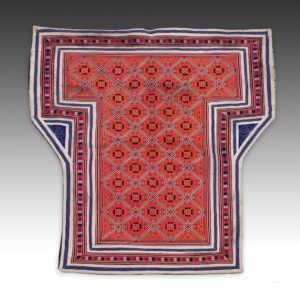
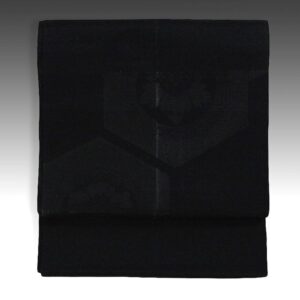
A kimono dresser in 1930s Japan ties the obi last and judges it first. Asian textiles span silk and cotton from Japan to the Indonesian archipelago. Japanese fukuro, maru and Nagoya obi woven with cranes, cherry blossom and gold thread sit beside haori jackets and kimono of the 1920s to 1940s. From the hill villages of Guizhou and Yunnan come baby carriers embroidered by the Miao, Ge Jia, Dong, Shui and Buyi, alive with butterflies, coins and revolving-thunder motifs meant to guard a child. Bhutanese kira and kera woven on back-strap looms, Lao and Karen silks from Thailand and Laos, Taoist shaman’s robes and Kaili tunics from Sulawesi carry the weaving to the Himalaya and the islands.
Silk velvet, glazed cotton, metallic brocade and indigo gain depth under lamplight. An obi along a walnut sideboard, a framed baby carrier in a bedroom, a Bhutanese cloth over a reading chair. Color without clutter.
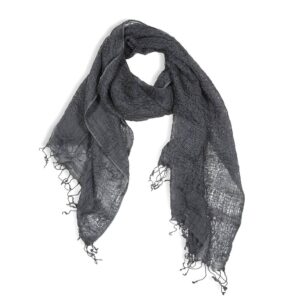
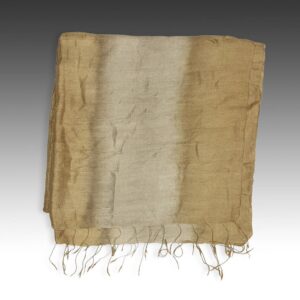
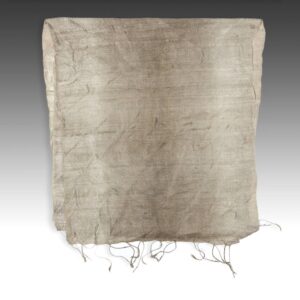
In the collection now: Thai Silk Scarf, Thai Silk Scarf, and Japanese Nagoya Obi with Geometric Motif.
Showing all 6 results