Kimonos & Obis
Kyoto, 1930. A bride’s trunk is opened, and the silk comes out in layers, each one heavier with gold than the last.
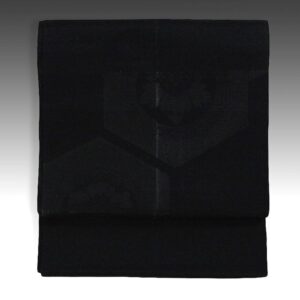
Kimonos and obis run mostly from the Taisho and early Showa years, the 1920s through the 1940s. The obi is the broad sash that holds the kimono closed. Maru obi, the most formal, are woven double width and folded. Fukuro obi are patterned on one face. Nagoya obi are folded narrow at one end, for easier tying. Their brocades carry flying cranes, butterflies, chrysanthemum and cherry blossom in gold-wrapped thread, and one maru obi is woven with the Hannya Shingyo, the Heart Sutra. Haori jackets, men’s kimono and velvet pieces complete the wardrobe.
Silk and gold catch the light differently from morning to evening.
A sash, in short, that did more work than most belts.
Showing the single result