South & Central American Textiles & Rugs
In the Andes, a cloth is a bag, a cradle and a statement, depending on how it is folded. South and Central American textiles come from the Andes and Mesoamerica. Aymara and Quechua weavers of Bolivia and Peru made awayo and lliclla, women’s mantles used to carry babies and goods, chuspa coca-leaf bags, tari ritual cloths for coca, chullo hats and jilikat ponchos, the mark of community leaders. Fragments from the Chancay culture of coastal Peru, woven between about 1000 and 1470 CE, and older Nazca weaving show how deep the craft runs. From Guatemala comes the huipil, the woven and embroidered tunic of Maya women, each village with its own designs.
Alpaca, sheep’s wool and cotton in cochineal red and indigo hold strong, warm color. Frame an awayo in a dining room and the history comes to dinner.
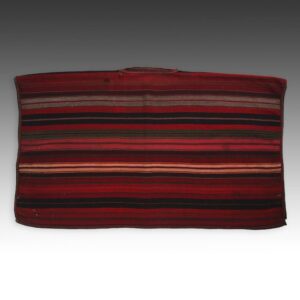
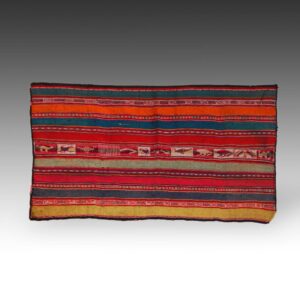
In the collection now: Tari Fragment, Bolivia and Jilikat Punchu or Leader's Poncho.
Showing all 2 results