Korean & Japanese
A Korean village in the Joseon years, a Japanese merchant house in Meiji. Different rooms, same problem: where to put everything.
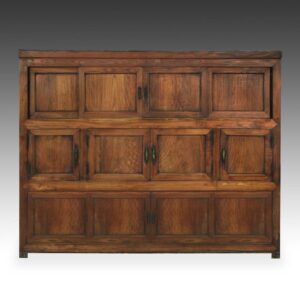
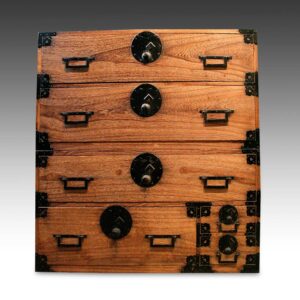
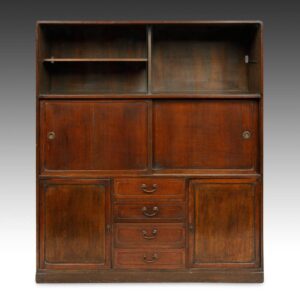
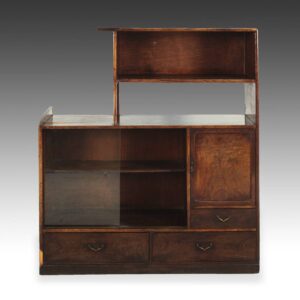
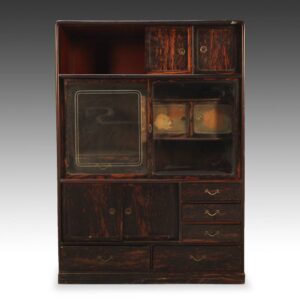
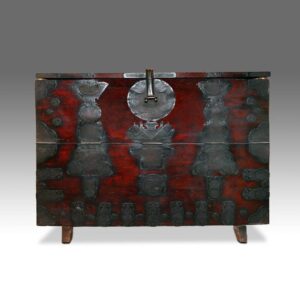
Korean and Japanese chests answered in pine, elm, burl and other native woods, fitted with hand-forged iron and brass. The Japanese tansu comes in many forms: cha dansu tea chests with small doors and drawers, mizuya dansu kitchen cabinets, stacked chests in two sections, step tansu, and rice chests that held grain. The Korean bandaji, a front-opening chest of the Joseon period, kept clothing and bedding behind broad plates of iron or brass, with butterfly hinges and lock fittings.
The hardware is the design. Black iron against warm wood, brass worn to a soft glow. Nineteenth and early twentieth century, all of it.
Drawers keep secrets well. These have had practice.
In the collection now: Japanese Cha Dansu or Tea Tansu, Japanese Cha Dansu or Tea Tansu with Four Drawers & Four Doors, and Japanese Cha Dansu or Tea Tansu.
Showing all 6 results