Roman Glass
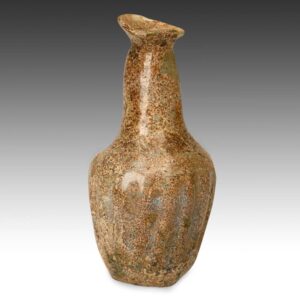
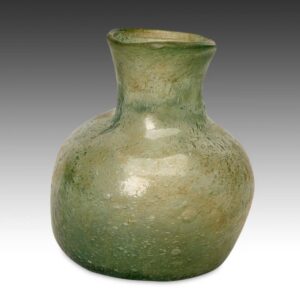
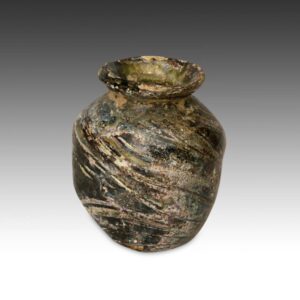
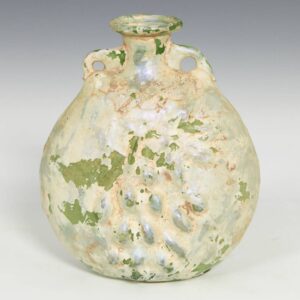
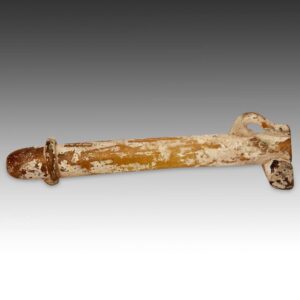
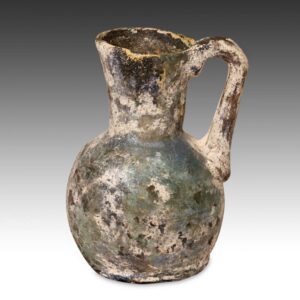
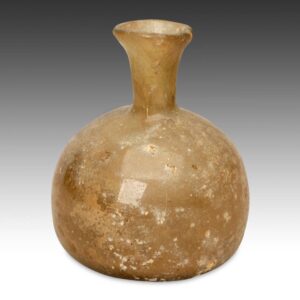
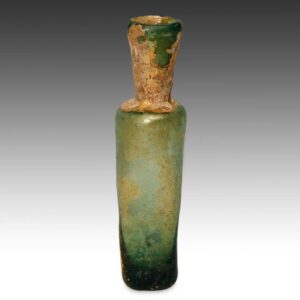
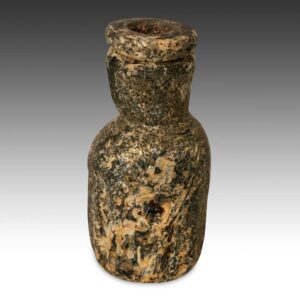
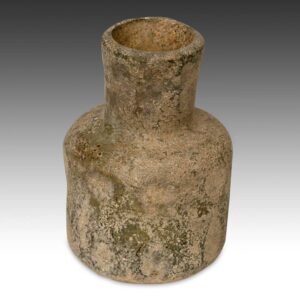
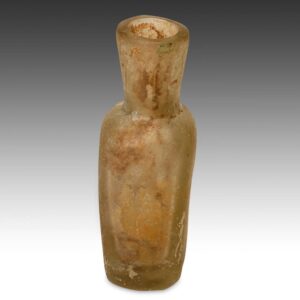
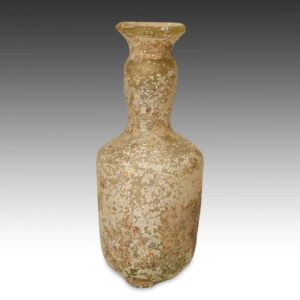
The Syro-Palestinian coast, the first century BC, and a breath blown through an iron pipe. Roman glass from the eastern Mediterranean was mostly made between the third and seventh centuries AD. Glassblowing, developed on that coast, turned glass from a luxury into an everyday material across the empire, and workshops produced flasks, globular unguent bottles, cups, small oinochoe or pouring jugs and pendants, including phalliform amulets worn for protection and luck.
Centuries in the ground changed them. Chemical weathering left a skin of iridescence in silver, blue, gold and violet, and some vessels are dulled to a soft milky crust. The forms are thin-walled and slightly irregular, with trapped bubbles and tooled rims. Glass this old wants light. A single flask in a bathroom niche throws color as the sun moves.
In the collection now: Asian Vessel, Asian Vessel, and Phalliform Pendant.
Showing 1–12 of 16 results